NEWS: A single DPA is now all you need to manage all your school’s suppliers
Author: Amber Lovell
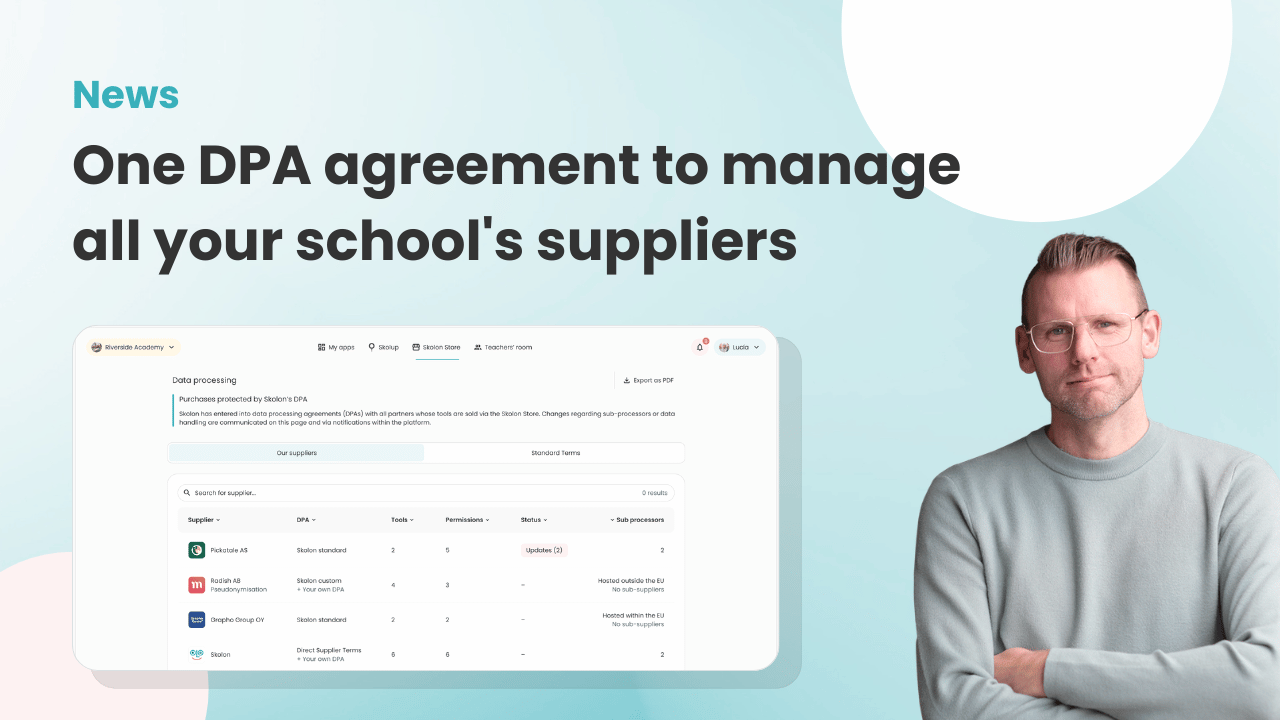
Keeping track of every contract, supplier, and how data is processed is a major challenge for schools using digital tools and learning resources. Skolon’s new Data Processing Agreement (DPA) feature makes this significantly easier. All essential supplier information is now collated into one clear, central overview, and only one DPA is required – the agreement with Skolon.
One agreement is all it takes
When your school purchases digital learning resources and tools via the Skolon Store, Skolon takes overall responsibility for the Data Processing Agreements with the suppliers. This means your school no longer needs to sign separate DPAs with every individual provider. One Data Processing Agreement is enough — the one with Skolon:
- Centralised list: All suppliers gathered in one place.
- Contract types: Which type of agreement is in effect.
- Data sharing: Exactly what data is shared—and with whom.
- Storage locations: Where data is stored.
- Sub-processors: Which third-party sub-processors are being used.
- Live updates: Current status and updates from suppliers.
- Pseudonymisation: How data masking is managed.
- Reporting: The ability to export reports.
While this overview provides peace of mind for those managing digital tools, data security, or procurement, there is still one crucial point to keep in mind. Ole clarifies:
“It is important to remember that the responsibility for assessing how user data is handled by each supplier always rests with the school. You must ensure that each supplier’s data processing aligns with your specific internal policies and requirements.”
However, Skolon makes it much easier to make the right decisions and halt the use of tools where data handling does not meet your school’s internal standards—before any data is even shared.
What does your school need to do?
- Verify that you approve of each supplier’s data handling and storage.
- Purchase digital tools and learning resources via the Skolon Store and use them via the Skolon platform.
Skolon takes care of the rest—from the purchase of digital resources to the delivery of licences to the right users, expenditure tracking, and increased control over data security.
Skolon already takes full responsibility for DPAs when your school purchases via the Skolon Store. The enhanced overview, which makes it even easier to monitor suppliers’ sub-processors, is expected to be ready before the start of the Autumn Term 2026.
This is Skolon – we gather the best digital educational tools and make them work in the classroom.
Skolon is an independent platform for digital educational tools and learning resources, created for both teachers and students. With Skolon, accessing and using your digital educational tools is easy – security increases, administration decreases, and there’s more time for learning.
The digital educational tools come from both small and large providers, all of whom have one thing in common – they create digital educational tools that are beneficial for the school environment.
Information
Author: Amber Lovell
Share this story
Subscribe
Would you like our newest articles delivered to your inbox? Sign up now!
Keeping track of every contract, supplier, and how data is processed is a major challenge for schools using digital tools and learning resources. Skolon’s new Data Processing Agreement (DPA) feature makes this significantly easier. All essential supplier information is now collated into one clear, central overview, and only one DPA is required – the agreement with Skolon.
One agreement is all it takes
When your school purchases digital learning resources and tools via the Skolon Store, Skolon takes overall responsibility for the Data Processing Agreements with the suppliers. This means your school no longer needs to sign separate DPAs with every individual provider. One Data Processing Agreement is enough — the one with Skolon:
- Centralised list: All suppliers gathered in one place.
- Contract types: Which type of agreement is in effect.
- Data sharing: Exactly what data is shared—and with whom.
- Storage locations: Where data is stored.
- Sub-processors: Which third-party sub-processors are being used.
- Live updates: Current status and updates from suppliers.
- Pseudonymisation: How data masking is managed.
- Reporting: The ability to export reports.
While this overview provides peace of mind for those managing digital tools, data security, or procurement, there is still one crucial point to keep in mind. Ole clarifies:
“It is important to remember that the responsibility for assessing how user data is handled by each supplier always rests with the school. You must ensure that each supplier’s data processing aligns with your specific internal policies and requirements.”
However, Skolon makes it much easier to make the right decisions and halt the use of tools where data handling does not meet your school’s internal standards—before any data is even shared.
What does your school need to do?
- Verify that you approve of each supplier’s data handling and storage.
- Purchase digital tools and learning resources via the Skolon Store and use them via the Skolon platform.
Skolon takes care of the rest—from the purchase of digital resources to the delivery of licences to the right users, expenditure tracking, and increased control over data security.
Skolon already takes full responsibility for DPAs when your school purchases via the Skolon Store. The enhanced overview, which makes it even easier to monitor suppliers’ sub-processors, is expected to be ready before the start of the Autumn Term 2026.
This is Skolon – we gather the best digital educational tools and make them work in the classroom.
Skolon is an independent platform for digital educational tools and learning resources, created for both teachers and students. With Skolon, accessing and using your digital educational tools is easy – security increases, administration decreases, and there’s more time for learning.
The digital educational tools come from both small and large providers, all of whom have one thing in common – they create digital educational tools that are beneficial for the school environment.
Share this story
Subscribe
Would you like our newest articles delivered to your inbox? Sign up now!