Meet the Educator: Nici Foote – A Champion of Belonging
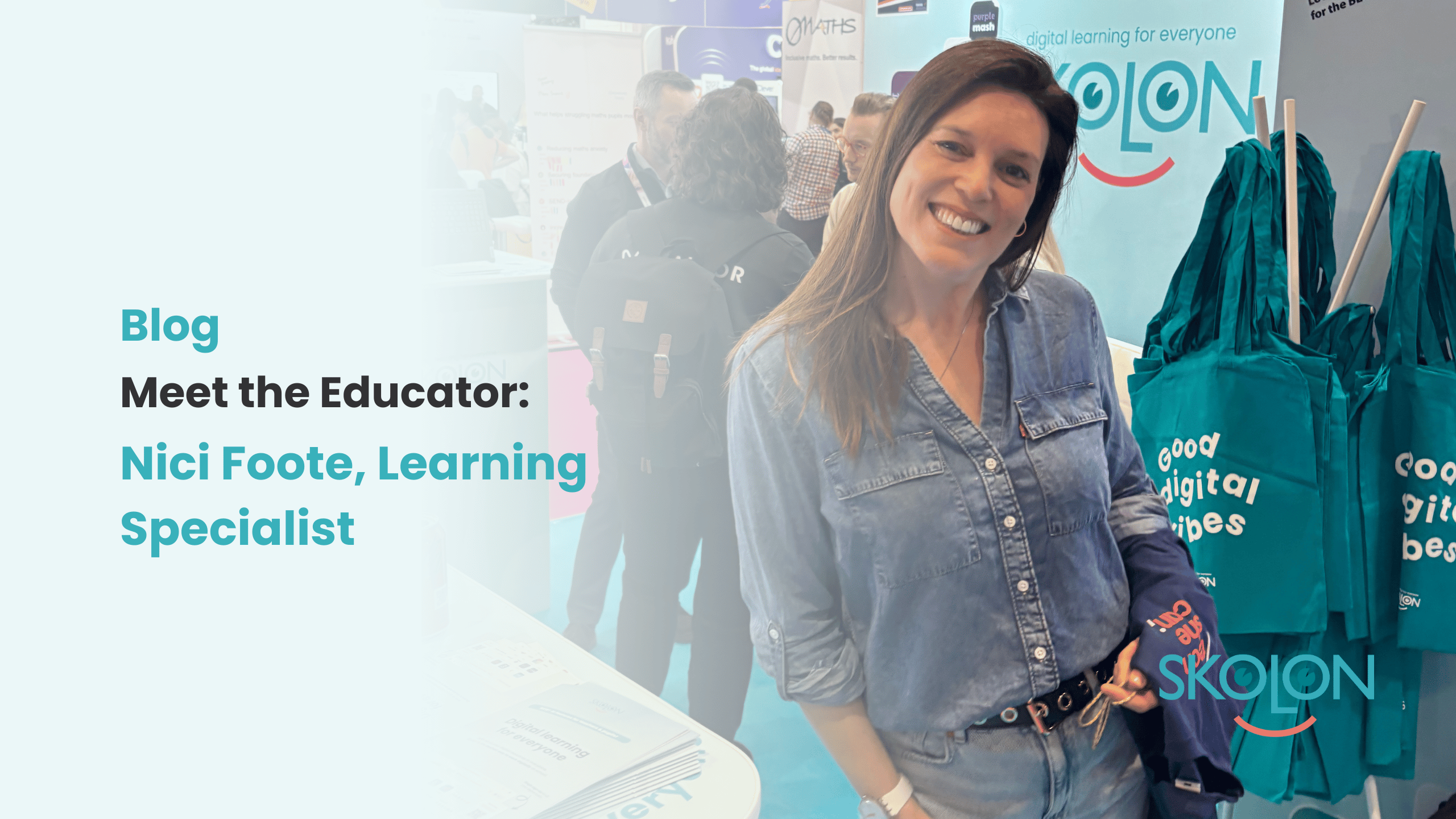
Welcome back to “Meet the Educator”, our monthly spotlight series where we share the real stories, insights, and everyday brilliance of educators across the country.
In this edition, we’re thrilled to introduce you to Nici Foote, a self-described “rule-breaker with a mission” and the founder of Unbarrier.Me.
Nici Foote is a rule-breaker with a mission.
As an educator, coach, and the founder of Unbarrier.Me, Nici is somewhat of a globetrotter, having spent her career traversing the world. From the UK to Singapore, Bangkok, and Beijing and beyond, Nici’s career has revolved around advocating for a version of education where every child actually belongs.
In this interview, Nici opens up about her own neurodivergent journey, why she’s “doubling down” on her own business, and how we can stop the “bait and switch” of education to ensure inclusion is never just a bolt-on.
Read on to meet the effervescent Nici Foote!
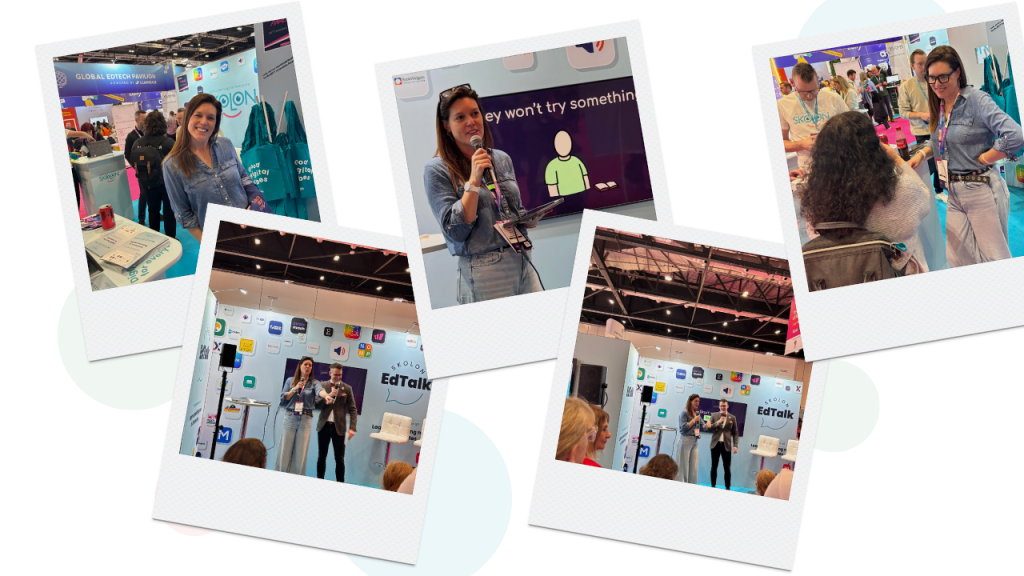
Can you tell us a little bit about yourself and your role in education?
“I’m an educator, and I’ve always been an educator,” Nici says. With a background spanning Primary and IB schools internationally, it’s safe to say her heart is firmly rooted in Early Years leadership.
“I have a deep passion for Early Years because it’s where belonging, joy, and play are the foundations of everything. We know those are the fundamentals that help children thrive.”
Today, Nici works at the intersection of technology and inclusion, coaching schools on digital strategy and systems and remains focused on how we can support every student, she says “Whether that’s through a digital system or a human one—so they can truly thrive.”
What inspired you to become an educator?
Nici’s drive comes from a place of personal reclamation. “My own education was really dysfunctional. I was diagnosed with dyslexia and dyscalculia when I was 10, and then ADHD and auditory processing disorder at 20,” she explains.
Growing up in an army family and moving between Germany and Belgium, Nici left school feeling like a failure. “I realised later that it wasn’t me that was ‘weird and funky’ although I am a little bit, but it was the system. I wanted to prove that difference isn’t a deficit; it’s a design advantage. I’m determined to prove everyone wrong and ensure other children don’t have to struggle the way I did.”
What does a typical day look like for you?
“I’m an early riser,” Nici shares. “I thrive on routine, coffee, and tea – lots of it.”
Despite her outgoing persona, Nici is a “social extrovert who recharges in solitude.”
Her day is a high-energy mix of motherhood (acting as a “taxi driver” for her teenagers, and yes, she will give you a lift too) and creative flow.
“I work late into the evening or early mornings when the world is quiet. That’s when my brain is calmest and I can iterate plans or create content. I often eat at my laptop because I’m terrified a distraction will burst the flow!”
What are your current goals and challenges?
Nici recently made the leap from corporate employment to running her own business. “I’m a rule-breaker; if I see a system I don’t like, I want to change it. Corporate structures didn’t always fit my brain, so I’ve ‘doubled down’ on Unbarrier.Me.”
Her main goal is helping schools move from “awareness” to “action.” “I want to help schools embed inclusion so it isn’t a bolt-on. We need to move from ‘we care about inclusion’ to ‘we are doing inclusion well.’ “That’s why I focus on helping schools make belonging measurable and sustainable — so inclusion moves from intention into everyday practice.”
How are you using technology to support learning?
For Nici, technology is the ultimate “unbarrier.” She champions tools that offer voice, visuals, and choice. “I couldn’t live without built-in accessibility features, text-to-speech and reading supports, and creative tools that give learners voice, visuals, and choice.”
“The real success is when technology stops being ‘assistive’ and just becomes the way everyone learns.”
How do you choose and implement new technology?
“I always start with values, then people, and only then think about systems,” Nici says. Before looking at a screen, she asks: What barrier are we trying to remove? When it comes to CPD, she believes the focus must shift. “It’s not about showing teachers features; it’s about building confidence and giving people permission to experiment. Inclusion grows through habit, not just policy.”
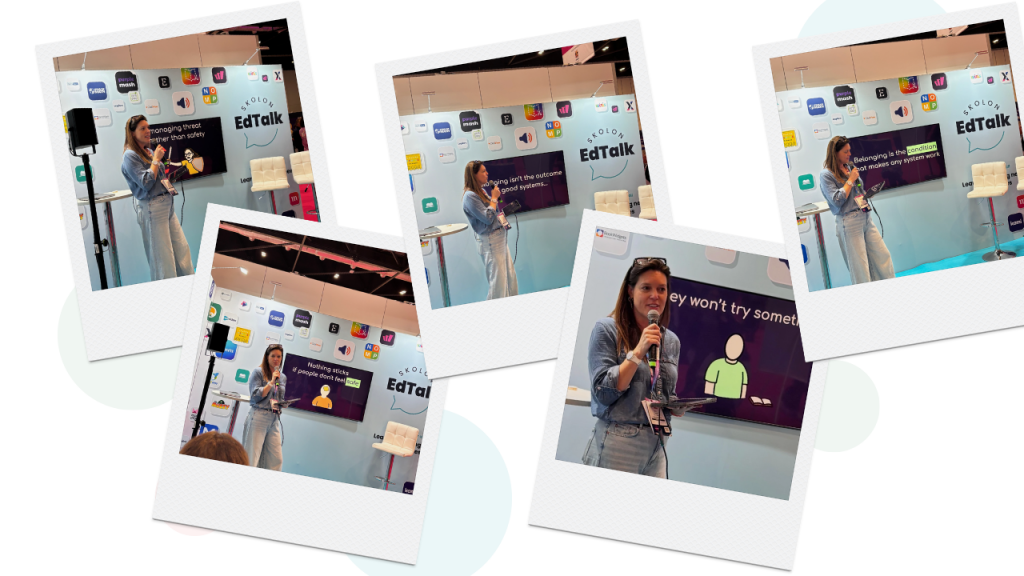
What does the future of education look like in the UK?
Nici is vocal about the “School-to-Prison Pipeline,” pointing to UK research showing that dyslexia and wider literacy difficulties are significantly over-represented in prison populations — with estimates suggesting around 30–40% of people in custody are affected. This compares with an estimated 5–15% of the general population, many of whom are undiagnosed.
“The future depends on how brave we are in rethinking assessment and curriculum,” she says. “I see EdTech evolving to include AI that helps teachers notice learning patterns in real time, but it must remain human-centred. We need to stop the ‘bait and switch’ — where joy, play, and belonging quietly disappear as children get older.”
If you could wave a magic wand and solve one problem, what would it be?
“Inclusion for all,” Nici answers without hesitation.
Her “Magic Wand” list includes:
- Universal Design for Learning (UDL) embedded in all teacher training.
- Mandatory neurodiversity education for all staff.
- Fast, equitable access to assessment and diagnosis.
“If families don’t have the means for a private diagnosis, children are often mislabelled through the lens of behaviour, parenting, or ‘low ability’ — labels that are deeply limiting and can follow them throughout their education — with lasting consequences for confidence, mental wellbeing, and life chances.”
What advice would you give to other educators?
Nici recommends a simple four-step cycle she uses in her work:
Notice (What is blocking the learning?)
Design (Create one inclusive tweak.)
Try (Put it into practice.)
Embed (Make it part of the culture.)
What trend is Nici most excited (or cautious) about?
“AI— when it’s used well — has enormous potential for multimodal learning and reducing cognitive load, particularly for neurodivergent learners. But it must be anchored in belonging. AI should support thinking, communication, and access, while amplifying human relationships — never replacing them.”
A Vision for belonging
Nici’s journey from a student who felt “let down by the system” to a “rule-breaking” founder perfectly mirrors the core of our mission. Her story reminds us that when we remove barriers, whether through digital strategy or human connection, we aren’t just helping a specific group of students; we are making the entire educational experience better for everyone.
At Skolon, we share Nici’s belief that inclusion should never be a “bolt-on”. It must be the foundation. By providing a single, personalised digital environment, we aim to turn Nici’s “Magic Wand” wish into a daily reality, ensuring that every child has the tools they need to belong and thrive from day one. To learn more about Nici or to get in touch with her, you can visit her website here.
Information
Share this story
Subscribe
Would you like our newest articles delivered to your inbox? Sign up now!
Welcome back to “Meet the Educator”, our monthly spotlight series where we share the real stories, insights, and everyday brilliance of educators across the country.
In this edition, we’re thrilled to introduce you to Nici Foote, a self-described “rule-breaker with a mission” and the founder of Unbarrier.Me.
Nici Foote is a rule-breaker with a mission.
As an educator, coach, and the founder of Unbarrier.Me, Nici is somewhat of a globetrotter, having spent her career traversing the world. From the UK to Singapore, Bangkok, and Beijing and beyond, Nici’s career has revolved around advocating for a version of education where every child actually belongs.
In this interview, Nici opens up about her own neurodivergent journey, why she’s “doubling down” on her own business, and how we can stop the “bait and switch” of education to ensure inclusion is never just a bolt-on.
Read on to meet the effervescent Nici Foote!
Can you tell us a little bit about yourself and your role in education?
“I’m an educator, and I’ve always been an educator,” Nici says. With a background spanning Primary and IB schools internationally, it’s safe to say her heart is firmly rooted in Early Years leadership.
“I have a deep passion for Early Years because it’s where belonging, joy, and play are the foundations of everything. We know those are the fundamentals that help children thrive.”
Today, Nici works at the intersection of technology and inclusion, coaching schools on digital strategy and systems and remains focused on how we can support every student, she says “Whether that’s through a digital system or a human one—so they can truly thrive.”
What inspired you to become an educator?
Nici’s drive comes from a place of personal reclamation. “My own education was really dysfunctional. I was diagnosed with dyslexia and dyscalculia when I was 10, and then ADHD and auditory processing disorder at 20,” she explains.
Growing up in an army family and moving between Germany and Belgium, Nici left school feeling like a failure. “I realised later that it wasn’t me that was ‘weird and funky’ although I am a little bit, but it was the system. I wanted to prove that difference isn’t a deficit; it’s a design advantage. I’m determined to prove everyone wrong and ensure other children don’t have to struggle the way I did.”
What does a typical day look like for you?
“I’m an early riser,” Nici shares. “I thrive on routine, coffee, and tea – lots of it.”
Despite her outgoing persona, Nici is a “social extrovert who recharges in solitude.”
Her day is a high-energy mix of motherhood (acting as a “taxi driver” for her teenagers, and yes, she will give you a lift too) and creative flow.
“I work late into the evening or early mornings when the world is quiet. That’s when my brain is calmest and I can iterate plans or create content. I often eat at my laptop because I’m terrified a distraction will burst the flow!”
What are your current goals and challenges?
Nici recently made the leap from corporate employment to running her own business. “I’m a rule-breaker; if I see a system I don’t like, I want to change it. Corporate structures didn’t always fit my brain, so I’ve ‘doubled down’ on Unbarrier.Me.”
Her main goal is helping schools move from “awareness” to “action.” “I want to help schools embed inclusion so it isn’t a bolt-on. We need to move from ‘we care about inclusion’ to ‘we are doing inclusion well.’ “That’s why I focus on helping schools make belonging measurable and sustainable — so inclusion moves from intention into everyday practice.”
How are you using technology to support learning?
For Nici, technology is the ultimate “unbarrier.” She champions tools that offer voice, visuals, and choice. “I couldn’t live without built-in accessibility features, text-to-speech and reading supports, and creative tools that give learners voice, visuals, and choice.”
“The real success is when technology stops being ‘assistive’ and just becomes the way everyone learns.”
How do you choose and implement new technology?
“I always start with values, then people, and only then think about systems,” Nici says. Before looking at a screen, she asks: What barrier are we trying to remove? When it comes to CPD, she believes the focus must shift. “It’s not about showing teachers features; it’s about building confidence and giving people permission to experiment. Inclusion grows through habit, not just policy.”
What does the future of education look like in the UK?
Nici is vocal about the “School-to-Prison Pipeline,” pointing to UK research showing that dyslexia and wider literacy difficulties are significantly over-represented in prison populations — with estimates suggesting around 30–40% of people in custody are affected. This compares with an estimated 5–15% of the general population, many of whom are undiagnosed.
“The future depends on how brave we are in rethinking assessment and curriculum,” she says. “I see EdTech evolving to include AI that helps teachers notice learning patterns in real time, but it must remain human-centred. We need to stop the ‘bait and switch’ — where joy, play, and belonging quietly disappear as children get older.”
If you could wave a magic wand and solve one problem, what would it be?
“Inclusion for all,” Nici answers without hesitation.
Her “Magic Wand” list includes:
- Universal Design for Learning (UDL) embedded in all teacher training.
- Mandatory neurodiversity education for all staff.
- Fast, equitable access to assessment and diagnosis.
“If families don’t have the means for a private diagnosis, children are often mislabelled through the lens of behaviour, parenting, or ‘low ability’ — labels that are deeply limiting and can follow them throughout their education — with lasting consequences for confidence, mental wellbeing, and life chances.”
What advice would you give to other educators?
Nici recommends a simple four-step cycle she uses in her work:
Notice (What is blocking the learning?)
Design (Create one inclusive tweak.)
Try (Put it into practice.)
Embed (Make it part of the culture.)
What trend is Nici most excited (or cautious) about?
“AI— when it’s used well — has enormous potential for multimodal learning and reducing cognitive load, particularly for neurodivergent learners. But it must be anchored in belonging. AI should support thinking, communication, and access, while amplifying human relationships — never replacing them.”
A Vision for belonging
Nici’s journey from a student who felt “let down by the system” to a “rule-breaking” founder perfectly mirrors the core of our mission. Her story reminds us that when we remove barriers, whether through digital strategy or human connection, we aren’t just helping a specific group of students; we are making the entire educational experience better for everyone.
At Skolon, we share Nici’s belief that inclusion should never be a “bolt-on”. It must be the foundation. By providing a single, personalised digital environment, we aim to turn Nici’s “Magic Wand” wish into a daily reality, ensuring that every child has the tools they need to belong and thrive from day one. To learn more about Nici or to get in touch with her, you can visit her website here.
Share this story
Subscribe
Would you like our newest articles delivered to your inbox? Sign up now!