Meet the Educator – Jacob Woolcock

Author: Amber Lovell
From a childhood spent in the very same primary school where he ended up working, to helping educators across the country embrace technology, Jacob Woolcock’s journey into education, much like many other of our guests, was anything but planned.
Welcome back to Meet the educator, our series celebrating the people behind education: their stories, their experiences and the ideas shaping how we teach and learn.
This time, we’re grabbing our bodyboards and heading to Cornwall to meet Jacob Woolcock, an educator, speaker and content creator with a passion for computing, creativity and helping teachers see technology in a different light.
After spending 16 years at the same primary school he attended as a child, Jacob has recently stepped away from the classroom to set his sights on bigger things and take his work further afield.
However, whether he’s delivering workshops, speaking at events or creating bite-sized educational videos, his mission remains the same: helping educators feel confident enough to experiment, get creative and make the most of technology.
From school pupil to teacher: a journey that wasn’t planned
Some people know exactly what they want to do from an early age. Others have a five-year plan, a ten-year plan and a carefully mapped-out career. Jacob? Not so much.
His route into teaching began with a rather less glamorous opportunity: a week spent completing a school stock inventory.
Having once been a pupil at the primary school where his mum later worked as a receptionist, Jacob was already familiar with the building. After college, he returned one Friday to visit her, where the headteacher asked what he planned to do next.
While Jacob didn’t have an answer, the headteacher had an idea.
The stock inventory turned into an opportunity to work in IT, helping with network management, installing software and supporting children individually.
Before long, the headteacher had spotted something else: Jacob’s natural ability to connect with pupils. He encouraged Jacob to train as a teacher while completing his degree part-time. And just like that, a career in education began.
As Jacob explains, “It all just kind of happened. I don’t think it was by accident, but it happened in a very unplanned way.”
Sixteen years later, he had become one of the longest-serving members of staff at the school that had shaped so much of his own childhood.
It’s a lovely reminder that the path into education doesn’t always look the way we expect. Sometimes, the right opportunity comes along before we’ve even worked out what we’re looking for.
Making computing creative, collaborative and accessible
For much of his teaching career, Jacob specialised in computing, working with every class from Reception through to Year 6.
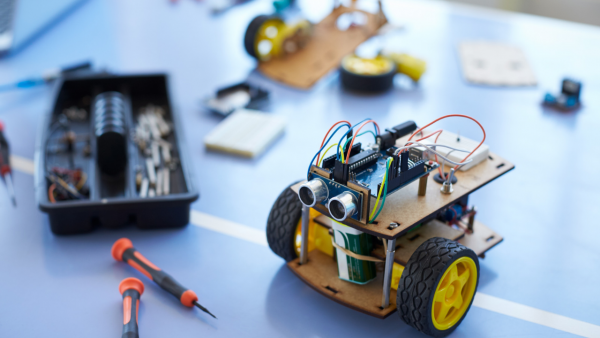
His lessons went far beyond learning how to use a computer; with Jacob’s support, pupils explored coding, graphic design, 3D printing, robotics and problem-solving, often linking their digital learning to topics they were studying elsewhere in the curriculum.
“If a Year 5 class was learning about space, for example, they might use Minecraft Education to work together on building a moon station, putting their research into practice while developing their collaboration and problem-solving skills.”
For Jacob, that kind of learning is what makes computing exciting.
He believes the subject can sometimes feel intimidating to educators, particularly when it comes wrapped in technical language such as algorithms, variables and repetition. But at its heart, computing is about creativity, curiosity and finding solutions.
“We’re not trying to raise a class of computer scientists or coding wizards,” he explains. “We’re trying to raise a class of problem solvers who can be creative and embrace technology in the future.”
It’s a perspective that feels particularly relevant as technology continues to evolve faster than most organisations can keep up with.
The tools pupils use today may look completely different by the time they finish their education, let alone enter the workplace, but the ability to think critically, solve problems and approach unfamiliar challenges will remain valuable.
For Jacob, the aim isn’t simply to teach children how to use today’s technology. It’s to help them feel confident enough to explore whatever comes next.
Helping teachers feel less afraid of technology
That same philosophy now runs through Jacob’s work beyond the classroom. Since September, Jacob’s been delivering training sessions, workshops and keynote talks to schools and trusts across the UK, with opportunities to work across Europe, too.
A big part of that work involves changing the way educators think about technology. Rather than treating computing as a complicated specialist subject, Jacob wants teachers to recognise the possibilities it offers across the curriculum. And that starts with giving themselves permission to try.
“Don’t be afraid to experiment with technology,” he advises.
“There is absolutely nothing you can do on that computer that’s going to make it suddenly burst into flames!”
His point is simple: mistakes are part of learning. If something doesn’t work, you can press undo, try a different approach and learn from the experience.
It’s advice that applies just as much to educators as it does to their pupils.
Undeniably, technology can feel daunting when you’re worried about getting something wrong, especially when time is already in short supply. But creating an environment where experimentation is encouraged can help teachers discover new ways to engage pupils and bring lessons to life.
And you don’t need to be a coding expert to get started. Sometimes, all it takes is a willingness to explore something new.
The tools that made a difference
During his time in the classroom, two tools featured particularly prominently in Jacob’s teaching: Scratch and Times Tables Rock Stars.
Scratch, the block-based coding platform, offered a friendly introduction to programming while allowing pupils to experiment with more advanced possibilities, including micro:bit, LEGO Robotics and AI sensors.
For whole-school learning, Times Tables Rock Stars was another favourite.
Jacob even came up with an activity called the “Wheel of Rockstars”, using a digital wheel to select different game modes. With everyone playing at once, he could get pupils through 12 games in just 15 minutes.
But it wasn’t simply about getting through as many activities as possible.
One of the things Jacob valued was helping pupils recognise their own progress, even when they weren’t immediately brilliant at something.
As he explains, “They can see themselves getting better even if they’re not brilliant at it.”
That visibility matters. When pupils can recognise that they’re improving, it gives them something tangible to build on and encourages them to keep going.
It’s a useful reminder that technology is at its best when it supports learning, rather than becoming the focus of the lesson itself.
AI, change and the future of education
It’s impossible to talk about technology in education without of course talking about artificial intelligence.
Jacob recognises that AI is already part of the world pupils are growing up in, and he hopes that education can become more adaptable as digital technology continues to develop.
“We have AI now. AI is a thing in the world that we can’t escape,”
With schools taking different approaches, from banning certain tools to exploring how they might be used, there’s still plenty to work through. For Jacob, the wider challenge is ensuring education can respond to technological change at a pace that reflects just how quickly that change is happening.
But adapting to new technology isn’t only about the tools themselves. It’s also about the people expected to use them.
When asked what he’d change about education if he could wave a magic wand, Jacob’s answer wasn’t about introducing another platform or adding more technology to classrooms.
Instead, he focused on something much more fundamental: giving teachers more time to do what they came into the profession to do.
“I would love to be able to lift some of those pressures to focus back on why we want to be teachers, which is to work with children.”
It’s a sentiment many educators will recognise. Between administrative tasks, paperwork and competing demands, finding time to focus on pupils can be a challenge.
Technology has the potential to help, yet only when it’s been introduced thoughtfully and with a clear purpose. The goal should be to make teaching and learning better, not add another layer of complexity to what is an already demanding job.
So, what comes next for Jacob?
Leaving the classroom after 16 years is a big change, particularly when that classroom is in the very school where your own journey in education began.
But Jacob is embracing the opportunity to take his ideas to a wider audience.
Alongside his training and speaking engagements, he’s continuing to develop his educational content, creating short YouTube videos called “Quick Tips” to share practical advice in bite-sized pieces.

He’s also one of ten creators selected to take part in a YouTube Creator Incubator, where he’s developing his approach to content creation and exploring how to reach more people through both short-form and longer videos.
It’s a new chapter, but one that builds on the same principles that shaped his teaching career: sharing knowledge, encouraging curiosity and helping others feel more confident with technology.
And perhaps that’s the most interesting thing about Jacob’s journey.
He didn’t set out with a grand plan to become an educator, but he found something he loved, built on it and is now finding new ways to share his passion.
His advice to other educators feels like such a prominent and fitting place to leave things: don’t be afraid to try something new. You might get it wrong, you might have to start again, and you might discover something you never expected.
After all, sometimes the best things happen when you don’t have everything planned.
That’s another educator story, another set of ideas to take away, and another reminder of the people working to make education better every day.
Meet the educator is our series celebrating the experiences, insights and everyday brilliance of educators. Follow Skolon for more stories from across the education community, and discover how digital tools can help make learning more accessible, secure and simple for everyone.
Information
Author: Amber Lovell
Share this story
Subscribe
Would you like our newest articles delivered to your inbox? Sign up now!
From a childhood spent in the very same primary school where he ended up working, to helping educators across the country embrace technology, Jacob Woolcock’s journey into education, much like many other of our guests, was anything but planned.
Welcome back to Meet the educator, our series celebrating the people behind education: their stories, their experiences and the ideas shaping how we teach and learn.
This time, we’re grabbing our bodyboards and heading to Cornwall to meet Jacob Woolcock, an educator, speaker and content creator with a passion for computing, creativity and helping teachers see technology in a different light.
After spending 16 years at the same primary school he attended as a child, Jacob has recently stepped away from the classroom to set his sights on bigger things and take his work further afield.
However, whether he’s delivering workshops, speaking at events or creating bite-sized educational videos, his mission remains the same: helping educators feel confident enough to experiment, get creative and make the most of technology.
From school pupil to teacher: a journey that wasn’t planned
Some people know exactly what they want to do from an early age. Others have a five-year plan, a ten-year plan and a carefully mapped-out career. Jacob? Not so much.
His route into teaching began with a rather less glamorous opportunity: a week spent completing a school stock inventory.
Having once been a pupil at the primary school where his mum later worked as a receptionist, Jacob was already familiar with the building. After college, he returned one Friday to visit her, where the headteacher asked what he planned to do next.
While Jacob didn’t have an answer, the headteacher had an idea.
The stock inventory turned into an opportunity to work in IT, helping with network management, installing software and supporting children individually.
Before long, the headteacher had spotted something else: Jacob’s natural ability to connect with pupils. He encouraged Jacob to train as a teacher while completing his degree part-time. And just like that, a career in education began.
As Jacob explains, “It all just kind of happened. I don’t think it was by accident, but it happened in a very unplanned way.”
Sixteen years later, he had become one of the longest-serving members of staff at the school that had shaped so much of his own childhood.
It’s a lovely reminder that the path into education doesn’t always look the way we expect. Sometimes, the right opportunity comes along before we’ve even worked out what we’re looking for.
Making computing creative, collaborative and accessible
For much of his teaching career, Jacob specialised in computing, working with every class from Reception through to Year 6.
His lessons went far beyond learning how to use a computer; with Jacob’s support, pupils explored coding, graphic design, 3D printing, robotics and problem-solving, often linking their digital learning to topics they were studying elsewhere in the curriculum.
“If a Year 5 class was learning about space, for example, they might use Minecraft Education to work together on building a moon station, putting their research into practice while developing their collaboration and problem-solving skills.”
For Jacob, that kind of learning is what makes computing exciting.
He believes the subject can sometimes feel intimidating to educators, particularly when it comes wrapped in technical language such as algorithms, variables and repetition. But at its heart, computing is about creativity, curiosity and finding solutions.
“We’re not trying to raise a class of computer scientists or coding wizards,” he explains. “We’re trying to raise a class of problem solvers who can be creative and embrace technology in the future.”
It’s a perspective that feels particularly relevant as technology continues to evolve faster than most organisations can keep up with.
The tools pupils use today may look completely different by the time they finish their education, let alone enter the workplace, but the ability to think critically, solve problems and approach unfamiliar challenges will remain valuable.
For Jacob, the aim isn’t simply to teach children how to use today’s technology. It’s to help them feel confident enough to explore whatever comes next.
Helping teachers feel less afraid of technology
That same philosophy now runs through Jacob’s work beyond the classroom. Since September, Jacob’s been delivering training sessions, workshops and keynote talks to schools and trusts across the UK, with opportunities to work across Europe, too.
A big part of that work involves changing the way educators think about technology. Rather than treating computing as a complicated specialist subject, Jacob wants teachers to recognise the possibilities it offers across the curriculum. And that starts with giving themselves permission to try.
“Don’t be afraid to experiment with technology,” he advises.
“There is absolutely nothing you can do on that computer that’s going to make it suddenly burst into flames!”
His point is simple: mistakes are part of learning. If something doesn’t work, you can press undo, try a different approach and learn from the experience.
It’s advice that applies just as much to educators as it does to their pupils.
Undeniably, technology can feel daunting when you’re worried about getting something wrong, especially when time is already in short supply. But creating an environment where experimentation is encouraged can help teachers discover new ways to engage pupils and bring lessons to life.
And you don’t need to be a coding expert to get started. Sometimes, all it takes is a willingness to explore something new.
The tools that made a difference
During his time in the classroom, two tools featured particularly prominently in Jacob’s teaching: Scratch and Times Tables Rock Stars.
Scratch, the block-based coding platform, offered a friendly introduction to programming while allowing pupils to experiment with more advanced possibilities, including micro:bit, LEGO Robotics and AI sensors.
For whole-school learning, Times Tables Rock Stars was another favourite.
Jacob even came up with an activity called the “Wheel of Rockstars”, using a digital wheel to select different game modes. With everyone playing at once, he could get pupils through 12 games in just 15 minutes.
But it wasn’t simply about getting through as many activities as possible.
One of the things Jacob valued was helping pupils recognise their own progress, even when they weren’t immediately brilliant at something.
As he explains, “They can see themselves getting better even if they’re not brilliant at it.”
That visibility matters. When pupils can recognise that they’re improving, it gives them something tangible to build on and encourages them to keep going.
It’s a useful reminder that technology is at its best when it supports learning, rather than becoming the focus of the lesson itself.
AI, change and the future of education
It’s impossible to talk about technology in education without of course talking about artificial intelligence.
Jacob recognises that AI is already part of the world pupils are growing up in, and he hopes that education can become more adaptable as digital technology continues to develop.
“We have AI now. AI is a thing in the world that we can’t escape,”
With schools taking different approaches, from banning certain tools to exploring how they might be used, there’s still plenty to work through. For Jacob, the wider challenge is ensuring education can respond to technological change at a pace that reflects just how quickly that change is happening.
But adapting to new technology isn’t only about the tools themselves. It’s also about the people expected to use them.
When asked what he’d change about education if he could wave a magic wand, Jacob’s answer wasn’t about introducing another platform or adding more technology to classrooms.
Instead, he focused on something much more fundamental: giving teachers more time to do what they came into the profession to do.
“I would love to be able to lift some of those pressures to focus back on why we want to be teachers, which is to work with children.”
It’s a sentiment many educators will recognise. Between administrative tasks, paperwork and competing demands, finding time to focus on pupils can be a challenge.
Technology has the potential to help, yet only when it’s been introduced thoughtfully and with a clear purpose. The goal should be to make teaching and learning better, not add another layer of complexity to what is an already demanding job.
So, what comes next for Jacob?
Leaving the classroom after 16 years is a big change, particularly when that classroom is in the very school where your own journey in education began.
But Jacob is embracing the opportunity to take his ideas to a wider audience.
Alongside his training and speaking engagements, he’s continuing to develop his educational content, creating short YouTube videos called “Quick Tips” to share practical advice in bite-sized pieces.
He’s also one of ten creators selected to take part in a YouTube Creator Incubator, where he’s developing his approach to content creation and exploring how to reach more people through both short-form and longer videos.
It’s a new chapter, but one that builds on the same principles that shaped his teaching career: sharing knowledge, encouraging curiosity and helping others feel more confident with technology.
And perhaps that’s the most interesting thing about Jacob’s journey.
He didn’t set out with a grand plan to become an educator, but he found something he loved, built on it and is now finding new ways to share his passion.
His advice to other educators feels like such a prominent and fitting place to leave things: don’t be afraid to try something new. You might get it wrong, you might have to start again, and you might discover something you never expected.
After all, sometimes the best things happen when you don’t have everything planned.
That’s another educator story, another set of ideas to take away, and another reminder of the people working to make education better every day.
Meet the educator is our series celebrating the experiences, insights and everyday brilliance of educators. Follow Skolon for more stories from across the education community, and discover how digital tools can help make learning more accessible, secure and simple for everyone.
Share this story
Subscribe
Would you like our newest articles delivered to your inbox? Sign up now!