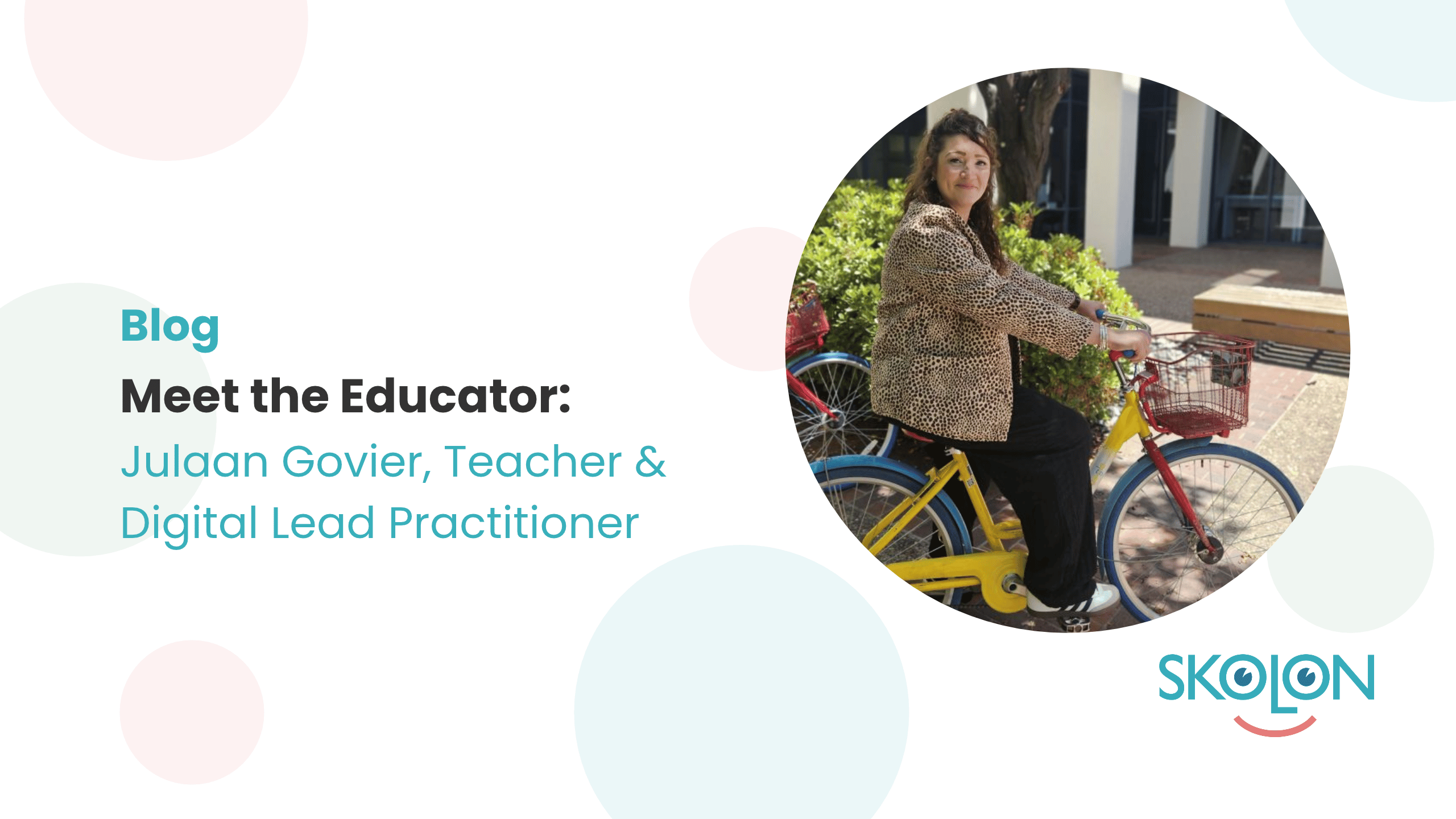
Meet the Educator – Julaan Govier
Author: Amber Lovell
We caught up with the primary teacher and digital lead practitioner at LEO Academy Trust to talk about inclusion, digital equity and why sometimes the best thing teachers can do is learn alongside their pupils.
With 18 years in education, Julaan Govier has seen plenty of changes in the classroom, but one thing that has remained present throughout her career is her passion for making a difference to young people’s lives.
Having started her career as a class teacher in a Church of England school in Richmond Borough, Julaan progressed to assistant headteacher before realising that her heart was still in the classroom.
“I realised my heart probably was more in the classroom with the children as opposed to being a leader,”
Today, Julaan is still a practising primary teacher, working in Year 5 at Cheam Common Junior Academy, part of LEO Academy Trust, where she has been for just over 10 years. Alongside her classroom role, she is now an official lead practitioner for digital, supporting the trust’s growing network of 15 schools.
From presenting internationally in California, Finland and Denmark to working with Google as a certified educator, trainer and Gemini trainer, Julaan has become a familiar face and name in the world of EdTech. Last academic year, she received the Google Transformational Hero award, followed by this year’s Student Voice Champion award.
But despite the recognition and opportunities, she is clear about what matters most.
“I’m still just a teacher doing my day-to-day and caring about the children.”
Putting pedagogy before technology
At LEO Academy Trust, technology isn’t about introducing shiny new tools for the sake of it; it’s about understanding how they can improve learning, support different needs and give children greater independence.
A key part of Julaan’s work is ensuring teachers use Google Workspace for Education effectively, with a particular focus on pedagogy and inclusion.
The trust’s independent research, carried out with Dr Fiona Aubrey-Smith, highlighted the positive impact technology can have on SEND learners and children with disadvantaged needs. It also helped shape a motto that Julaan regularly returns to:
“What’s necessary for some children is actually useful for all children.”
For her, this is at the heart of inclusive teaching. Technology can remove barriers that might otherwise prevent a child from showing what they know, while creating opportunities for every pupil to work more independently.
Julaan believes that technology should give teachers more time to focus on the human side of education, too.
“Many people think technology is a barrier or distraction, but our model accelerates learning and gives teachers time back to repurpose. It frees up time to be more human and focus on pupil well-being rather than just academic standards.”
It’s also why Julaan is keen to challenge the idea that every child should be expected to learn in exactly the same way.
“Not every child fits standard expectations, so empowering them and building their confidence is really important to me.”
Giving every learner a voice
Ask Julaan where she’s seen technology make the biggest difference, and she’ll quickly point to SEND and EAL learners.
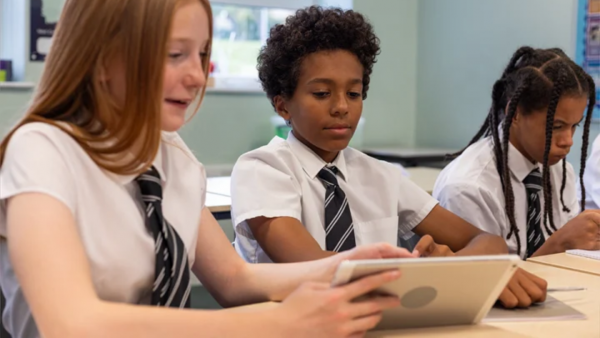
One example involved a pupil with an impressive knowledge of science who struggled with handwriting. By using speech-to-text and voice recordings on a Chromebook, the pupil could communicate their ideas in a way that allowed their understanding to shine through.
Julaan has also seen the difference technology can make for children learning English as an additional language. During an international exchange with Finland, she used Gemini Notebook to create bilingual resources and videos, helping visiting pupils access learning in a language they understood.
For her, these examples demonstrate something important: sometimes the biggest impact of technology isn’t making a lesson more exciting. It’s giving a child a way to take part when they might otherwise struggle.
Teaching children to think critically about AI
AI is another area Julaan is particularly passionate about, and she’s already introducing it to her Year 5 pupils. Her AI literacy lessons introduce concepts including bias, hallucinations, computer vision, statistical data and natural language processing.
Pupils also explore how AI already appears in everyday life, from YouTube recommendations and satnavs to weather predictions.
Julaan uses a simple analogy to help children understand the relationship between AI and information:
“The internet is like the library, and AI is like the librarian.”
The idea is that AI can help us find information more quickly, but it’s still up to us to question, interpret and evaluate what we discover.
She wants pupils to become critical consumers of technology, understanding the importance of fact-checking and recognising that AI isn’t always right.
But as technology takes on more of the information-gathering work, Julaan believes education must place even greater emphasis on uniquely human skills.
“Empathy, collaboration, creativity, and critical thinking” will all become increasingly important.
Learning alongside the children
Despite her work supporting digital strategy across the trust, Julaan remains firmly classroom-based. And she wouldn’t have it any other way.
Julaan is happy to admit that her pupils regularly teach her shortcuts and quicker ways of doing things. She’s also not afraid to make mistakes in front of them. “They love correcting my spelling or maths,” she laughs.
For her, this shared approach helps build confidence, belonging and a sense that everyone is learning together.
It’s also reflected in LEO Academy Trust‘s approach to professional development.
The trust gives teachers opportunities to experiment with technology, take risks and learn from pupil feedback, rather than feeling they need to get everything right the first time.
Through its monthly Digital Discovery Days, the trust also welcomes educators to visit its schools, observe live lessons, explore its digital strategy and speak directly with pupils about how they use technology.
A little advice for fellow educators
So, with so much experience of digital learning, inclusion and emerging technology, what advice would Julaan give to teachers who are keen to do more with EdTech?
Her answer is refreshingly straightforward: “start small.”
It might be marking, addressing misconceptions or helping pupils access instructions independently. Find a tool within your existing digital ecosystem that could help, spend two or three weeks getting comfortable with it, and only then move on to something else.
She also believes teachers need more time and proper training to explore technology without the pressure of getting everything right immediately.
“If I had a magic wand, it would be granted for time and proper teacher training.”
It’s a reminder that successful digital learning isn’t simply about giving teachers and pupils access to more technology. It’s about giving them the time, confidence and understanding to use it well.
And if there’s one thing Julaan’s approach demonstrates, it’s that when technology is introduced with the right purpose, it can do much more than support learning.
It can help every child find their voice, build their confidence and realise their potential.
That’s another educator story, another set of ideas to take away, and another reminder of the people working to make education better every day.
Meet the educator is our series celebrating the experiences, insights and everyday brilliance of educators. Follow Skolon for more stories from across the education community, and discover how digital tools can help make learning more accessible, secure and simple for everyone.
Information
Author: Amber Lovell
Share this story
Subscribe
Would you like our newest articles delivered to your inbox? Sign up now!
We caught up with the primary teacher and digital lead practitioner at LEO Academy Trust to talk about inclusion, digital equity and why sometimes the best thing teachers can do is learn alongside their pupils.
With 18 years in education, Julaan Govier has seen plenty of changes in the classroom, but one thing that has remained present throughout her career is her passion for making a difference to young people’s lives.
Having started her career as a class teacher in a Church of England school in Richmond Borough, Julaan progressed to assistant headteacher before realising that her heart was still in the classroom.
“I realised my heart probably was more in the classroom with the children as opposed to being a leader,”
Today, Julaan is still a practising primary teacher, working in Year 5 at Cheam Common Junior Academy, part of LEO Academy Trust, where she has been for just over 10 years. Alongside her classroom role, she is now an official lead practitioner for digital, supporting the trust’s growing network of 15 schools.
From presenting internationally in California, Finland and Denmark to working with Google as a certified educator, trainer and Gemini trainer, Julaan has become a familiar face and name in the world of EdTech. Last academic year, she received the Google Transformational Hero award, followed by this year’s Student Voice Champion award.
But despite the recognition and opportunities, she is clear about what matters most.
“I’m still just a teacher doing my day-to-day and caring about the children.”
Putting pedagogy before technology
At LEO Academy Trust, technology isn’t about introducing shiny new tools for the sake of it; it’s about understanding how they can improve learning, support different needs and give children greater independence.
A key part of Julaan’s work is ensuring teachers use Google Workspace for Education effectively, with a particular focus on pedagogy and inclusion.
The trust’s independent research, carried out with Dr Fiona Aubrey-Smith, highlighted the positive impact technology can have on SEND learners and children with disadvantaged needs. It also helped shape a motto that Julaan regularly returns to:
“What’s necessary for some children is actually useful for all children.”
For her, this is at the heart of inclusive teaching. Technology can remove barriers that might otherwise prevent a child from showing what they know, while creating opportunities for every pupil to work more independently.
Julaan believes that technology should give teachers more time to focus on the human side of education, too.
“Many people think technology is a barrier or distraction, but our model accelerates learning and gives teachers time back to repurpose. It frees up time to be more human and focus on pupil well-being rather than just academic standards.”
It’s also why Julaan is keen to challenge the idea that every child should be expected to learn in exactly the same way.
“Not every child fits standard expectations, so empowering them and building their confidence is really important to me.”
Giving every learner a voice
Ask Julaan where she’s seen technology make the biggest difference, and she’ll quickly point to SEND and EAL learners.
One example involved a pupil with an impressive knowledge of science who struggled with handwriting. By using speech-to-text and voice recordings on a Chromebook, the pupil could communicate their ideas in a way that allowed their understanding to shine through.
Julaan has also seen the difference technology can make for children learning English as an additional language. During an international exchange with Finland, she used Gemini Notebook to create bilingual resources and videos, helping visiting pupils access learning in a language they understood.
For her, these examples demonstrate something important: sometimes the biggest impact of technology isn’t making a lesson more exciting. It’s giving a child a way to take part when they might otherwise struggle.
Teaching children to think critically about AI
AI is another area Julaan is particularly passionate about, and she’s already introducing it to her Year 5 pupils. Her AI literacy lessons introduce concepts including bias, hallucinations, computer vision, statistical data and natural language processing.
Pupils also explore how AI already appears in everyday life, from YouTube recommendations and satnavs to weather predictions.
Julaan uses a simple analogy to help children understand the relationship between AI and information:
“The internet is like the library, and AI is like the librarian.”
The idea is that AI can help us find information more quickly, but it’s still up to us to question, interpret and evaluate what we discover.
She wants pupils to become critical consumers of technology, understanding the importance of fact-checking and recognising that AI isn’t always right.
But as technology takes on more of the information-gathering work, Julaan believes education must place even greater emphasis on uniquely human skills.
“Empathy, collaboration, creativity, and critical thinking” will all become increasingly important.
Learning alongside the children
Despite her work supporting digital strategy across the trust, Julaan remains firmly classroom-based. And she wouldn’t have it any other way.
Julaan is happy to admit that her pupils regularly teach her shortcuts and quicker ways of doing things. She’s also not afraid to make mistakes in front of them. “They love correcting my spelling or maths,” she laughs.
For her, this shared approach helps build confidence, belonging and a sense that everyone is learning together.
It’s also reflected in LEO Academy Trust‘s approach to professional development.
The trust gives teachers opportunities to experiment with technology, take risks and learn from pupil feedback, rather than feeling they need to get everything right the first time.
Through its monthly Digital Discovery Days, the trust also welcomes educators to visit its schools, observe live lessons, explore its digital strategy and speak directly with pupils about how they use technology.
A little advice for fellow educators
So, with so much experience of digital learning, inclusion and emerging technology, what advice would Julaan give to teachers who are keen to do more with EdTech?
Her answer is refreshingly straightforward: “start small.”
It might be marking, addressing misconceptions or helping pupils access instructions independently. Find a tool within your existing digital ecosystem that could help, spend two or three weeks getting comfortable with it, and only then move on to something else.
She also believes teachers need more time and proper training to explore technology without the pressure of getting everything right immediately.
“If I had a magic wand, it would be granted for time and proper teacher training.”
It’s a reminder that successful digital learning isn’t simply about giving teachers and pupils access to more technology. It’s about giving them the time, confidence and understanding to use it well.
And if there’s one thing Julaan’s approach demonstrates, it’s that when technology is introduced with the right purpose, it can do much more than support learning.
It can help every child find their voice, build their confidence and realise their potential.
That’s another educator story, another set of ideas to take away, and another reminder of the people working to make education better every day.
Meet the educator is our series celebrating the experiences, insights and everyday brilliance of educators. Follow Skolon for more stories from across the education community, and discover how digital tools can help make learning more accessible, secure and simple for everyone.
Share this story
Subscribe
Would you like our newest articles delivered to your inbox? Sign up now!