From accommodation to empowerment: the shift schools need to make in 2026
Author: Amber Lovell
It may be somewhat wrong to write this or even admit, but it’s a feeling that’s common across the whole sector when it comes to inclusion.
For years, it’s been treated like a series of knee-jerk reactions in the classroom to solve issues we know have existed for a L-O-N-G time and are only increasing in frequency.
It’s the age old tale of a pupil entering a classroom with a specific need, we then provide them with specific tools and if they have a diagnosis, we then give them permission to use a device.
But, as we navigate 2026, the gap between digital usage and actual accessibility has reached a breaking point.
Struggling in silence
A 2026 report from the Digital Poverty Alliance found that while digital tools are embedded in school life, only 36% of digitally excluded pupils have access to a laptop, and many find existing platforms confusing and inflexible to their specific learning needs.
The gap is further supported by findings in the 2024 Access Insights Report, which highlighted that 75% of students who encounter digital access issues, such as interfaces with poor UI or locked tools do not raise them with staff; they simply stop engaging.
This is an undeniable hidden struggle that firstly, shouldn’t exist in such a digital age we’re living in and secondly, really calls for a proactive shift.
The permission trap
The traditional approach to EdTech support is accommodation. It’s reactive, inconsistent, and quite frankly, exhausting for staff.
Under this model, intervention only kicks in after a student has already begun to fall behind or has navigated the lengthy process of receiving a formal diagnosis.
This creates a permission-based culture where students are made to feel different or singled out, often having to physically move to designated areas or wait for a teacher to unlock specific tools before they can begin their work.
This consumes time in the lesson and they’ve then missed the rest of the instructions, putting the learner behind before they’ve even had the chance to begin, which undeniably leaves the most vulnerable learners perpetually playing catch-up.
Universal empowerment
The shift for 2026 is toward empowerment which means moving to a model that is universal, proactive, and independent by design.
This requires an assurance that essential tools are no longer treated as novelty or bolt-ons, but are instead integrated directly into the fabric of the everyday digital environment. It truly has to be a pivotal shift that creates the right waves through the establishment of a bimodal learning environment; where every student, regardless of their specific ability, has the option to listen to text while they read it, the stigma surrounding support vanishes.
This relies on a zero-friction approach where support isn’t something a student has to be prescribed by the powers that be, or search for. By normalising these features for entire cohorts, we see student independence soar as they take ownership of how they consume information.
Keen to learn more about moving from accommodation to empowerment?
Join us on May 13th as we host a webinar with our friends at ReadSpeaker to explore how bimodal learning, universal access, and automated support can reduce teacher workload while helping every pupil build true independence.
Register now using the button below to secure your place or receive the recording if you can’t attend live.
The high cost of staying still
Remaining in the accommodation mindset isn’t just a pedagogical choice (if it could even be called that); it’s a significant risk.
This risk is amplified by mounting DfE pressure, as tightening standards on inclusive practice and digital strategy mean that simply doing enough is no longer an acceptable benchmark for leadership, and candidly, the idea of just ‘doing enough’ shouldn’t have been acceptable either.
Furthermore, staying at the beck and call of delivering reactive support fuels a workload crisis, as every manual intervention, from assigning a specific tool to fixing a lost login, adds yet another layer of administrative burden to an already stretched teaching staff.
Ultimately, though, the greatest cost is seen in student outcomes.
When learners are forced to rely on permission for every adjustment, they rarely develop the self-advocacy and independent agency. These are skills that are absolutely essential for success as they further their education and enter the modern workforce.
Enablers of the shift: Skolon & ReadSpeaker
Making this shift doesn’t require a total infrastructure overhaul at all. It’s much simpler than being reactive, like you may be now. It is simply about having the right ecosystem.
Skolon acts as the digital glue, removing the login friction that halts classroom momentum. It provides a single point of access for all digital tools, ensuring that no student is left staring at a password prompt while their peers are learning.
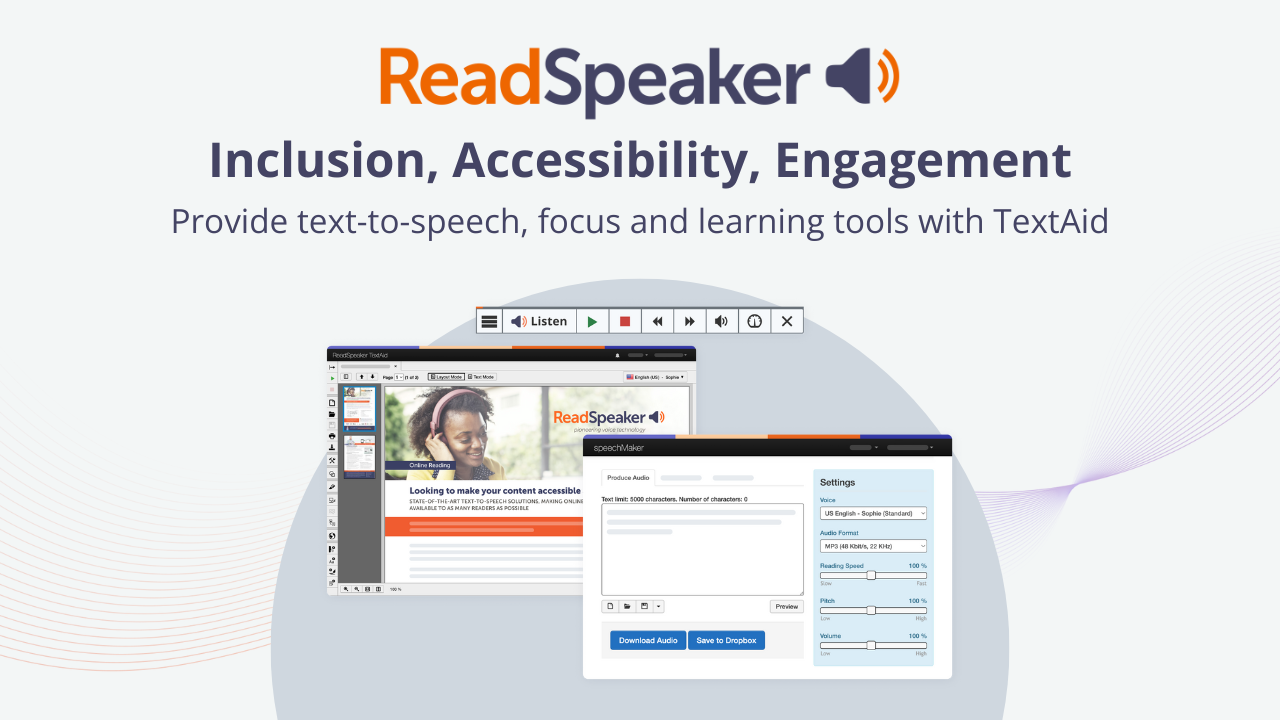
ReadSpeaker then layers onto that ecosystem, providing instant, high-quality text-to-speech across all digital content. Together, we transform accessibility from a special request into a universal standard. It’s not about giving a student a crutch; it’s about giving every student a personal toolkit.
Don’t get left behind
The schools and trusts seeing the greatest gains in 2026 aren’t the ones with the most gadgets… They are the ones that have removed the barriers to using them.
We’ll be showing exactly how this shift works in practice and how you can implement it without adding to your staff’s plate during our upcoming webinar. If you want to move beyond accommodation and start seeing true student independence, you won’t want to miss this.
This is Skolon – we gather the best digital educational tools and make them work in the classroom.
Skolon is an independent platform for digital educational tools and learning resources, created for both teachers and students. With Skolon, accessing and using your digital educational tools is easy – security increases, administration decreases, and there’s more time for learning.
The digital educational tools come from both small and large providers, all of whom have one thing in common – they create digital educational tools that are beneficial for the school environment.
Information
Author: Amber Lovell
Share this story
Subscribe
Would you like our newest articles delivered to your inbox? Sign up now!
It may be somewhat wrong to write this or even admit, but it’s a feeling that’s common across the whole sector when it comes to inclusion.
For years, it’s been treated like a series of knee-jerk reactions in the classroom to solve issues we know have existed for a L-O-N-G time and are only increasing in frequency.
It’s the age old tale of a pupil entering a classroom with a specific need, we then provide them with specific tools and if they have a diagnosis, we then give them permission to use a device.
But, as we navigate 2026, the gap between digital usage and actual accessibility has reached a breaking point.
Struggling in silence
A 2026 report from the Digital Poverty Alliance found that while digital tools are embedded in school life, only 36% of digitally excluded pupils have access to a laptop, and many find existing platforms confusing and inflexible to their specific learning needs.
The gap is further supported by findings in the 2024 Access Insights Report, which highlighted that 75% of students who encounter digital access issues, such as interfaces with poor UI or locked tools do not raise them with staff; they simply stop engaging.
This is an undeniable hidden struggle that firstly, shouldn’t exist in such a digital age we’re living in and secondly, really calls for a proactive shift.
The permission trap
The traditional approach to EdTech support is accommodation. It’s reactive, inconsistent, and quite frankly, exhausting for staff.
Under this model, intervention only kicks in after a student has already begun to fall behind or has navigated the lengthy process of receiving a formal diagnosis.
This creates a permission-based culture where students are made to feel different or singled out, often having to physically move to designated areas or wait for a teacher to unlock specific tools before they can begin their work.
This consumes time in the lesson and they’ve then missed the rest of the instructions, putting the learner behind before they’ve even had the chance to begin, which undeniably leaves the most vulnerable learners perpetually playing catch-up.
Universal empowerment
The shift for 2026 is toward empowerment which means moving to a model that is universal, proactive, and independent by design.
This requires an assurance that essential tools are no longer treated as novelty or bolt-ons, but are instead integrated directly into the fabric of the everyday digital environment. It truly has to be a pivotal shift that creates the right waves through the establishment of a bimodal learning environment; where every student, regardless of their specific ability, has the option to listen to text while they read it, the stigma surrounding support vanishes.
This relies on a zero-friction approach where support isn’t something a student has to be prescribed by the powers that be, or search for. By normalising these features for entire cohorts, we see student independence soar as they take ownership of how they consume information.
Keen to learn more about moving from accommodation to empowerment?
Join us on May 13th as we host a webinar with our friends at ReadSpeaker to explore how bimodal learning, universal access, and automated support can reduce teacher workload while helping every pupil build true independence.
Register now using the button below to secure your place or receive the recording if you can’t attend live.
The high cost of staying still
Remaining in the accommodation mindset isn’t just a pedagogical choice (if it could even be called that); it’s a significant risk.
This risk is amplified by mounting DfE pressure, as tightening standards on inclusive practice and digital strategy mean that simply doing enough is no longer an acceptable benchmark for leadership, and candidly, the idea of just ‘doing enough’ shouldn’t have been acceptable either.
Furthermore, staying at the beck and call of delivering reactive support fuels a workload crisis, as every manual intervention, from assigning a specific tool to fixing a lost login, adds yet another layer of administrative burden to an already stretched teaching staff.
Ultimately, though, the greatest cost is seen in student outcomes.
When learners are forced to rely on permission for every adjustment, they rarely develop the self-advocacy and independent agency. These are skills that are absolutely essential for success as they further their education and enter the modern workforce.
Enablers of the shift: Skolon & ReadSpeaker
Making this shift doesn’t require a total infrastructure overhaul at all. It’s much simpler than being reactive, like you may be now. It is simply about having the right ecosystem.
Skolon acts as the digital glue, removing the login friction that halts classroom momentum. It provides a single point of access for all digital tools, ensuring that no student is left staring at a password prompt while their peers are learning.
ReadSpeaker then layers onto that ecosystem, providing instant, high-quality text-to-speech across all digital content. Together, we transform accessibility from a special request into a universal standard. It’s not about giving a student a crutch; it’s about giving every student a personal toolkit.
Don’t get left behind
The schools and trusts seeing the greatest gains in 2026 aren’t the ones with the most gadgets… They are the ones that have removed the barriers to using them.
We’ll be showing exactly how this shift works in practice and how you can implement it without adding to your staff’s plate during our upcoming webinar. If you want to move beyond accommodation and start seeing true student independence, you won’t want to miss this.
This is Skolon – we gather the best digital educational tools and make them work in the classroom.
Skolon is an independent platform for digital educational tools and learning resources, created for both teachers and students. With Skolon, accessing and using your digital educational tools is easy – security increases, administration decreases, and there’s more time for learning.
The digital educational tools come from both small and large providers, all of whom have one thing in common – they create digital educational tools that are beneficial for the school environment.
Share this story
Subscribe
Would you like our newest articles delivered to your inbox? Sign up now!