Meet the Educator: Kate Ball – Building connection as a curriculum
Author: Amber Lovell
Welcome back to Meet the Educator – our monthly spotlight series where we share the real stories, insights, and everyday brilliance of educators across the country.
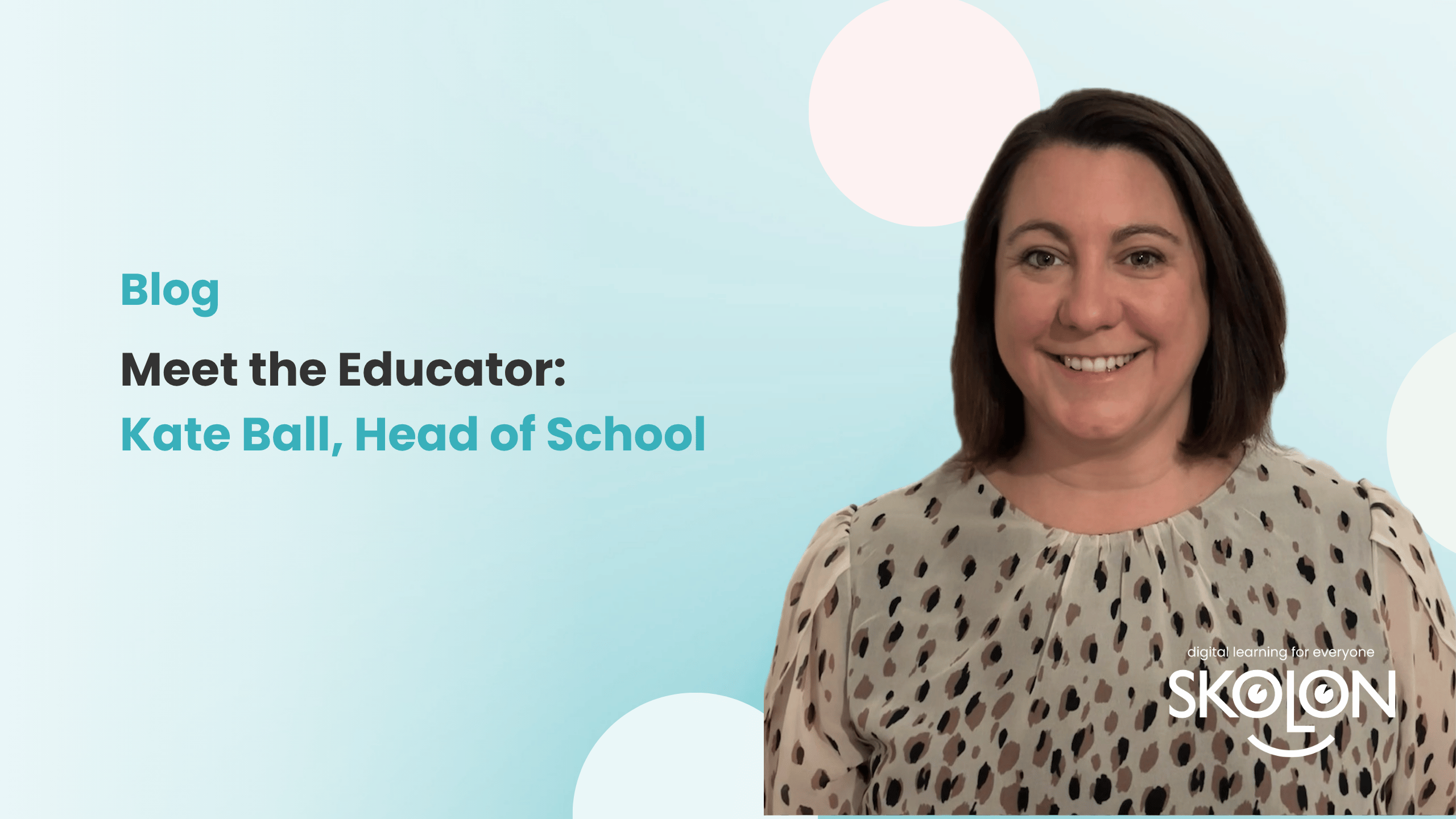
In this edition, we are privileged to introduce you to Kate Ball, Head of School at Emerald Place Clinic, a specialist Tier 4 inpatient CAMHS (Child and Adolescent Mental Health Services) hospital school. Kate’s journey is a powerful testament to the impact of leading with empathy, the importance of finding professional balance, and the belief that education is, first and foremost, about human connection.
A journey informed by heart and science
As with most of the educators we speak with, Kate’s path into education wasn’t too dissimilar.
After studying Psychology at university, she initially steered away from teaching. However, a lifelong proximity to additional needs, inspired by her sister who has Downs syndrome, Kate was eventually drawn back to the classroom.
After training on the job through a graduate program in Bristol, Kate spent 15 years at Freemantles, a specialist school for children with autism, working her way from class teacher to Head of Secondary and Further Education.
“I worked my way quite quickly through the ranks of leadership… [but] I was very anti-academisation and deeply set on my morals and beliefs. Like many people, I knew it was time to go before I actually did go.”
Last October, Kate made a pivotal jump. She chose to re-evaluate the traditional upward trajectory of leadership to find a role that harmonised her expertise in neurodiversity with her passion for mental health.
“A lot of people think that with leadership, you just have to keep going up and up and up. Actually, there becomes a point where you just have to re-evaluate… It’s about finding that balance between being a working mum, and investing in yourself and your own passions. The move I made to Emerald Place gave me the right balance at a time when I really needed it. .”
Inside Emerald Place: Where connection is the curriculum
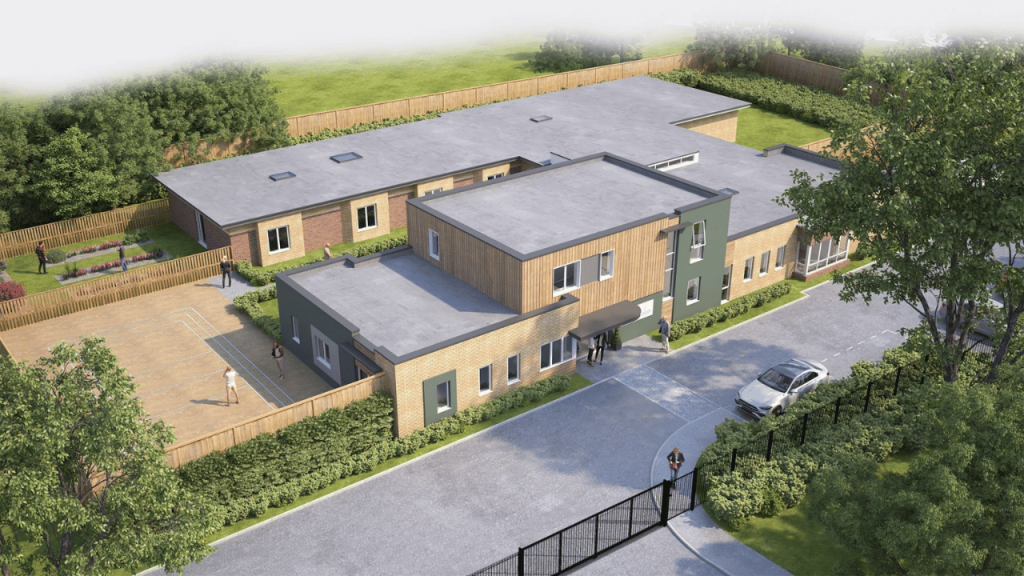
Emerald Place Clinic is a unique setting. It’s a 12-bed inpatient hospital where the school serves as a vital anchor for young people who are often at their most vulnerable. The school itself is tiny, consisting of one main classroom and a small group room, but its impact is immense and goes beyond its allocated space.
The daily reset
A typical day at Emerald Place begins with a clinical handover to assess whether students are “in a place where school can offer them something that day.” Lessons start at 9:30 AM with a grounding session called DEAR (Drop Everything and Read), which Kate has expanded to include podcasts, e-readers, and brain teasers to provide multiple ways for everyone to engage, regardless of their preferred learning style or accessibility needs.
The handprint wall: A sense of belonging
For many of Kate’s students, traditional education has been a source of failure or exclusion. To combat this, the school uses a “Handprint Wall.”
“One of the first activities they do is stamp their handprint on our wall to be part of our ‘gang.’ It gives them that sense of belonging at a time when they can feel really lost. Sticking their hand on a wall makes them believe they belong to something.”
This practice aligns with the February 2026 UK Whitepaper (Every Child Achieving and Thriving), which highlights that belonging is not a passive state. The report also noted that for students with histories of educational trauma, physical markers of presence, like the Handprint Wall, will serve as a neurological anchor, transitioning the student from a state of hyper-vigilance to one of psychological safety within the school community.

A relational approach
Kate and her team of specialist teachers operate on the philosophy that education cannot happen without emotional safety.
Distinct lines: School is a “fresh start” every hour, every lesson or every day. Whatever is needed to support a young person.
The core curriculum: Kate recently shared a slide at an inset day stating, “Connection is our curriculum.”
Creative outlets: Time in the curriculum is dedicated to cultural capital activities, SMSC reflections and creative projects, including origami, crochet, and art to help support and foster self-expression and regulation.
This approach reframes education as something deeply human. By prioritising connection, Kate and her team create a space where students can begin again, hour by hour, without the weight of what came before. In this environment, learning isn’t just about academic progress, but about rebuilding trust, confidence, and a sense of self.
The role of tech: Speeding up the “detective work”
In a setting where the average stay is just 90 days, Kate’s team must act as “educational detectives.” Because many students arrive with unidentified learning needs or have been out of school for many years, technology plays a crucial role in rapid baselining.
Kate highlights the use of Talamo for dyslexia and simple cognitive profiling:
“We need to use all the tools in our toolkit. Using the dyslexia and cognitive profiling screener has meant we can screen young people quickly and work out who has a high level of need so we can adjust our teaching strategies immediately.”
For students who may have spent years feeling misunderstood in education, this rapid insight can be a turning point. Being able to recognise and respond to learning needs so quickly helps rebuild confidence and removes barriers before they have a chance to take hold again.
Kate further emphasises the impact the school has on young people, noting that the true measure of success is seeing them move forward with a plan and a sense of purpose.
“We heard from one of our ‘alumni’ young people recently, a young man who wrote us a card to say he’d started at college and he’d got a part-time job. That’s what we want to hear. If we manage to make those links with the education providers, work out what they want to do college-wise, and start the applications… then we’ve done our job.”
For Kate, these small updates are the ultimate validation of the school’s mission: ensuring that a stay at Emerald Place isn’t a full stop, but a springboard.
Looking ahead: Hope as an outcome
When asked what success looks like for a student leaving Emerald Place, Kate doesn’t point to a grade or a number. Instead, she points to three core aims: Finding their voice, realising their potential, and having hope for the future.
“If they leave with just that tiny bit of hope that they can go and do something with their life, then we’ve done our job.”
The magic wand: Reframing resilience
To wrap up our chat, we asked Kate the “million-dollar question.” If she could wave a magic wand and solve one problem in education, she wouldn’t change a policy, she would change a perspective.
“I would wave a wand so that support for mental health isn’t just an ‘add-on.’ We need to reframe the idea of resilience. Our kids aren’t ‘less resilient’; they’ve been through COVID and are growing up in the world of social media. Schools need to play catch-up to support the young people of today taking into account what they’ve actually been through.”
A legacy of empathy
Kate’s story is a powerful reminder that education, at its most impactful, is a sanctuary. By treating connection as the primary curriculum and refusing to view mental health as an add-on, Kate and her team at Emerald Place are doing more than teaching subjects. They are rebuilding the foundational confidence these young people need to re-engage with the world.
In a landscape where the challenges facing students are more complex than ever, Kate’s leadership provides a vital blueprint. She shows us that when we lead with morals, prioritise emotional safety, and use technology to truly see the learner, we can turn even a 90-day stay into a life-changing springboard.
Through Kate’s eyes, success isn’t measured in grades, but in the moment a student finds their voice and leaves with that most essential of tools: hope.
Do you know an inspiring educator? If you know someone like Kate who is making a difference in their classroom or community, we’d love to hear from you. Get in touch or tag them on LinkedIn to nominate them for our next spotlight!
Information
Author: Amber Lovell
Share this story
Subscribe
Would you like our newest articles delivered to your inbox? Sign up now!
Welcome back to Meet the Educator – our monthly spotlight series where we share the real stories, insights, and everyday brilliance of educators across the country.
In this edition, we are privileged to introduce you to Kate Ball, Head of School at Emerald Place Clinic, a specialist Tier 4 inpatient CAMHS (Child and Adolescent Mental Health Services) hospital school. Kate’s journey is a powerful testament to the impact of leading with empathy, the importance of finding professional balance, and the belief that education is, first and foremost, about human connection.
A journey informed by heart and science
As with most of the educators we speak with, Kate’s path into education wasn’t too dissimilar.
After studying Psychology at university, she initially steered away from teaching. However, a lifelong proximity to additional needs, inspired by her sister who has Downs syndrome, Kate was eventually drawn back to the classroom.
After training on the job through a graduate program in Bristol, Kate spent 15 years at Freemantles, a specialist school for children with autism, working her way from class teacher to Head of Secondary and Further Education.
“I worked my way quite quickly through the ranks of leadership… [but] I was very anti-academisation and deeply set on my morals and beliefs. Like many people, I knew it was time to go before I actually did go.”
Last October, Kate made a pivotal jump. She chose to re-evaluate the traditional upward trajectory of leadership to find a role that harmonised her expertise in neurodiversity with her passion for mental health.
“A lot of people think that with leadership, you just have to keep going up and up and up. Actually, there becomes a point where you just have to re-evaluate… It’s about finding that balance between being a working mum, and investing in yourself and your own passions. The move I made to Emerald Place gave me the right balance at a time when I really needed it. .”
Inside Emerald Place: Where connection is the curriculum
Emerald Place Clinic is a unique setting. It’s a 12-bed inpatient hospital where the school serves as a vital anchor for young people who are often at their most vulnerable. The school itself is tiny, consisting of one main classroom and a small group room, but its impact is immense and goes beyond its allocated space.
The daily reset
A typical day at Emerald Place begins with a clinical handover to assess whether students are “in a place where school can offer them something that day.” Lessons start at 9:30 AM with a grounding session called DEAR (Drop Everything and Read), which Kate has expanded to include podcasts, e-readers, and brain teasers to provide multiple ways for everyone to engage, regardless of their preferred learning style or accessibility needs.
The handprint wall: A sense of belonging
For many of Kate’s students, traditional education has been a source of failure or exclusion. To combat this, the school uses a “Handprint Wall.”
“One of the first activities they do is stamp their handprint on our wall to be part of our ‘gang.’ It gives them that sense of belonging at a time when they can feel really lost. Sticking their hand on a wall makes them believe they belong to something.”
This practice aligns with the February 2026 UK Whitepaper (Every Child Achieving and Thriving), which highlights that belonging is not a passive state. The report also noted that for students with histories of educational trauma, physical markers of presence, like the Handprint Wall, will serve as a neurological anchor, transitioning the student from a state of hyper-vigilance to one of psychological safety within the school community.
A relational approach
Kate and her team of specialist teachers operate on the philosophy that education cannot happen without emotional safety.
Distinct lines: School is a “fresh start” every hour, every lesson or every day. Whatever is needed to support a young person.
The core curriculum: Kate recently shared a slide at an inset day stating, “Connection is our curriculum.”
Creative outlets: Time in the curriculum is dedicated to cultural capital activities, SMSC reflections and creative projects, including origami, crochet, and art to help support and foster self-expression and regulation.
This approach reframes education as something deeply human. By prioritising connection, Kate and her team create a space where students can begin again, hour by hour, without the weight of what came before. In this environment, learning isn’t just about academic progress, but about rebuilding trust, confidence, and a sense of self.
The role of tech: Speeding up the “detective work”
In a setting where the average stay is just 90 days, Kate’s team must act as “educational detectives.” Because many students arrive with unidentified learning needs or have been out of school for many years, technology plays a crucial role in rapid baselining.
Kate highlights the use of Talamo for dyslexia and simple cognitive profiling:
“We need to use all the tools in our toolkit. Using the dyslexia and cognitive profiling screener has meant we can screen young people quickly and work out who has a high level of need so we can adjust our teaching strategies immediately.”
For students who may have spent years feeling misunderstood in education, this rapid insight can be a turning point. Being able to recognise and respond to learning needs so quickly helps rebuild confidence and removes barriers before they have a chance to take hold again.
Kate further emphasises the impact the school has on young people, noting that the true measure of success is seeing them move forward with a plan and a sense of purpose.
“We heard from one of our ‘alumni’ young people recently, a young man who wrote us a card to say he’d started at college and he’d got a part-time job. That’s what we want to hear. If we manage to make those links with the education providers, work out what they want to do college-wise, and start the applications… then we’ve done our job.”
For Kate, these small updates are the ultimate validation of the school’s mission: ensuring that a stay at Emerald Place isn’t a full stop, but a springboard.
Looking ahead: Hope as an outcome
When asked what success looks like for a student leaving Emerald Place, Kate doesn’t point to a grade or a number. Instead, she points to three core aims: Finding their voice, realising their potential, and having hope for the future.
“If they leave with just that tiny bit of hope that they can go and do something with their life, then we’ve done our job.”
The magic wand: Reframing resilience
To wrap up our chat, we asked Kate the “million-dollar question.” If she could wave a magic wand and solve one problem in education, she wouldn’t change a policy, she would change a perspective.
“I would wave a wand so that support for mental health isn’t just an ‘add-on.’ We need to reframe the idea of resilience. Our kids aren’t ‘less resilient’; they’ve been through COVID and are growing up in the world of social media. Schools need to play catch-up to support the young people of today taking into account what they’ve actually been through.”
A legacy of empathy
Kate’s story is a powerful reminder that education, at its most impactful, is a sanctuary. By treating connection as the primary curriculum and refusing to view mental health as an add-on, Kate and her team at Emerald Place are doing more than teaching subjects. They are rebuilding the foundational confidence these young people need to re-engage with the world.
In a landscape where the challenges facing students are more complex than ever, Kate’s leadership provides a vital blueprint. She shows us that when we lead with morals, prioritise emotional safety, and use technology to truly see the learner, we can turn even a 90-day stay into a life-changing springboard.
Through Kate’s eyes, success isn’t measured in grades, but in the moment a student finds their voice and leaves with that most essential of tools: hope.
Do you know an inspiring educator? If you know someone like Kate who is making a difference in their classroom or community, we’d love to hear from you. Get in touch or tag them on LinkedIn to nominate them for our next spotlight!
Share this story
Subscribe
Would you like our newest articles delivered to your inbox? Sign up now!