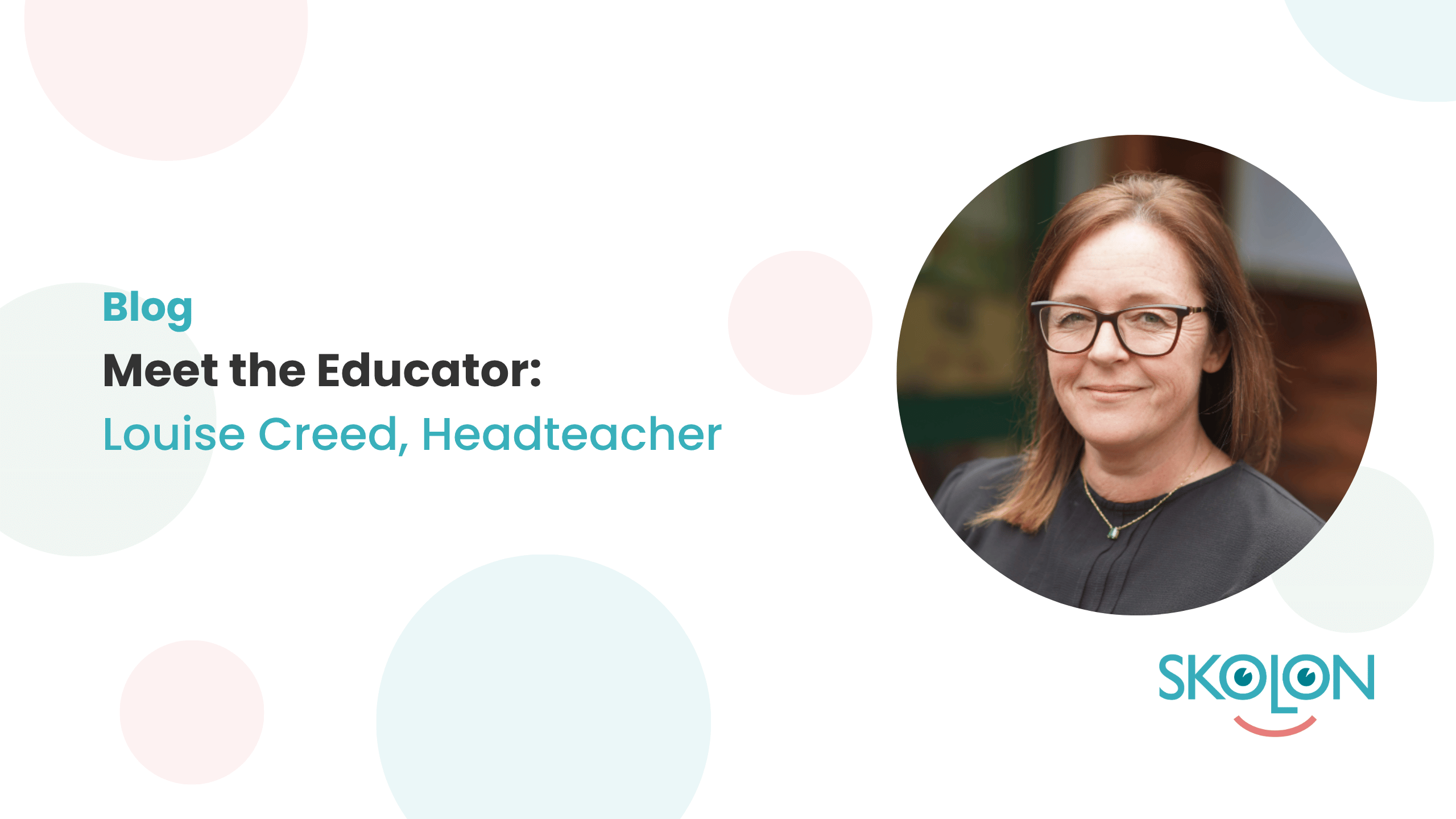
Meet the Educator: Louise Creed
Author: Amber Lovell
Welcome back to Meet the Educator – our monthly spotlight series where we share the real stories, insights, and everyday brilliance of educators across the country.
This month, we caught up with the landlady Head Teacher of Albert Pye and Ravensmere Schools, Louise Creed, who kindly shared her journey from being a landlady, to the leading lady of the schools.
Read on to meet Louise Creed, who is proving that a warm welcome, a “let me help you” attitude, and a fierce passion for levelling the playing field are *the* perfect ingredients for a thriving school community.
Meet Louise
I am always keen to find out how the educator I’m speaking with found themselves in education; oftentimes it was accidental, yet with Louise, her route into education, while unconventional, was entirely intentional and was driven purely by passion.
Prior to stepping into the classroom, she spent her early twenties running pubs in and around Oxford and Suffolk.
Her transition into education began organically when she started volunteering at her own children’s schools. At the time, she didn’t have a degree or formal educational qualifications; just a wealth of experience in management and customer service.
Realising she had a passion for “shaping little people,” Louise embarked on a 13-year journey of professional development. She progressed from a Teaching Assistant to achieving her Higher Level Teaching Assistant (HLTA) status, earned a degree in Inclusion while raising three young children, and eventually gained her teaching qualification.
Today, she leads a vibrant, merged primary and infant school community.
Community and mutual respect
Having attended a rural primary school herself, Louise is deeply passionate about maintaining a close-knit community feel, even within a larger school setting.
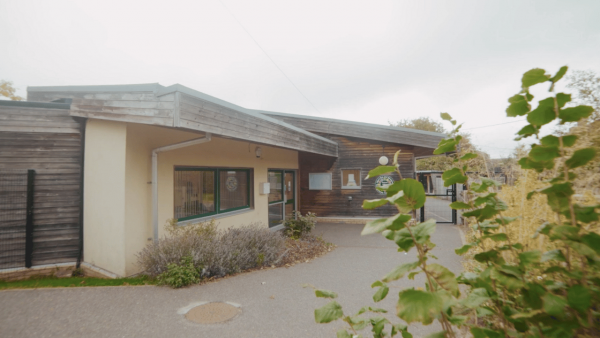
When the small, Victorian-era Ravensmere Infant School merged onto the Albert Pye site, her priority was ensuring that no child lost that personal touch. Every student is greeted at the gate each morning to foster a profound sense of belonging.
“A massive driving factor here is a sense of belonging for children. We have this vision of what a child is going to be, do, add to society when they leave us. It’s our job to guide them.”
Key pillars of Louise’s leadership include:
EdTech: Working smarter, not harder
Louise is a strong advocate for the purposeful use of technology in the classroom:
“When I first came here two, three years ago, teachers had their own memory sticks that they would keep stuff on, so we went onto an online system. I think what technology has enabled us to do is reduce our workload, work smarter, and also save time.”
With the support of the Active Learning Trust and a dedicated IT Lead, her schools have successfully integrated several key tools, with a great fondness for visualisers, of which Louise reviews as a ‘non-negotiable’ in her classrooms.
Showing children exactly how to work through problems step-by-step has, in her words, “skyrocketed” teaching and learning standards.
Additionally, Louise credits:
Creative software: Students use iPads and platforms like Charanga to create their own garage music and drum and bass beats, a strategy that has successfully engaged older boys in music lessons.
Streamlined back-office systems: By moving to shared online systems like Arbor and Teams, the school has significantly reduced teacher workload, replacing lost memory sticks with secure, collaborative workspaces.
Rather than running from the inevitable rise of AI and social media, Louise is an advocate for teaching children critical thinking and digital literacy, and believes in tackling it head-on.
“Our children here will use digital technology to create images and show how AI can alter, change, and filter things. I think when they suddenly realise that not everything they see through a screen is real, that’s like a big ‘oh my goodness’ moment.”
By demystifying the technology behind the screen, Louise does a great job to ensure her students are equipped with “skill, not just knowledge”; giving them the resilience and confidence to handle the digital world instead of simply shutting it down.
The magic wand question
One of my favourite questions to ask during a Meet the Educator interview is what single problem the educator in question would solve in education if given a magic wand, to which Louise points immediately to inequality.
“I think that’s my big thing… small rural primary schools and coastal towns not having access to the things that maybe inner-city schools have, and that lack of cultural capital. How are we going to stop those inequalities and make sure that it’s a level playing field for all?”
Indeed, how are we?
Louise’s ultimate goal is to level the playing field, ensuring that all children, regardless of their postcode or background, have the same opportunities and skills to succeed in the modern world.
From managing pubs to managing classrooms, Louise Creed proves that the best educators often take the scenic route, bringing a wealth of real-world empathy, practical problem-solving, and a welcoming smile to the school gates every single morning. To learn more about Louise’s schools, click here!
Information
Author: Amber Lovell
Share this story
Subscribe
Would you like our newest articles delivered to your inbox? Sign up now!
Welcome back to Meet the Educator – our monthly spotlight series where we share the real stories, insights, and everyday brilliance of educators across the country.
This month, we caught up with the landlady Head Teacher of Albert Pye and Ravensmere Schools, Louise Creed, who kindly shared her journey from being a landlady, to the leading lady of the schools.
Read on to meet Louise Creed, who is proving that a warm welcome, a “let me help you” attitude, and a fierce passion for levelling the playing field are *the* perfect ingredients for a thriving school community.
Meet Louise
I am always keen to find out how the educator I’m speaking with found themselves in education; oftentimes it was accidental, yet with Louise, her route into education, while unconventional, was entirely intentional and was driven purely by passion.
Prior to stepping into the classroom, she spent her early twenties running pubs in and around Oxford and Suffolk.
Her transition into education began organically when she started volunteering at her own children’s schools. At the time, she didn’t have a degree or formal educational qualifications; just a wealth of experience in management and customer service.
Realising she had a passion for “shaping little people,” Louise embarked on a 13-year journey of professional development. She progressed from a Teaching Assistant to achieving her Higher Level Teaching Assistant (HLTA) status, earned a degree in Inclusion while raising three young children, and eventually gained her teaching qualification.
Today, she leads a vibrant, merged primary and infant school community.
Community and mutual respect
Having attended a rural primary school herself, Louise is deeply passionate about maintaining a close-knit community feel, even within a larger school setting.
When the small, Victorian-era Ravensmere Infant School merged onto the Albert Pye site, her priority was ensuring that no child lost that personal touch. Every student is greeted at the gate each morning to foster a profound sense of belonging.
“A massive driving factor here is a sense of belonging for children. We have this vision of what a child is going to be, do, add to society when they leave us. It’s our job to guide them.”
Key pillars of Louise’s leadership include:
EdTech: Working smarter, not harder
Louise is a strong advocate for the purposeful use of technology in the classroom:
“When I first came here two, three years ago, teachers had their own memory sticks that they would keep stuff on, so we went onto an online system. I think what technology has enabled us to do is reduce our workload, work smarter, and also save time.”
With the support of the Active Learning Trust and a dedicated IT Lead, her schools have successfully integrated several key tools, with a great fondness for visualisers, of which Louise reviews as a ‘non-negotiable’ in her classrooms.
Showing children exactly how to work through problems step-by-step has, in her words, “skyrocketed” teaching and learning standards.
Additionally, Louise credits:
Creative software: Students use iPads and platforms like Charanga to create their own garage music and drum and bass beats, a strategy that has successfully engaged older boys in music lessons.
Streamlined back-office systems: By moving to shared online systems like Arbor and Teams, the school has significantly reduced teacher workload, replacing lost memory sticks with secure, collaborative workspaces.
Rather than running from the inevitable rise of AI and social media, Louise is an advocate for teaching children critical thinking and digital literacy, and believes in tackling it head-on.
“Our children here will use digital technology to create images and show how AI can alter, change, and filter things. I think when they suddenly realise that not everything they see through a screen is real, that’s like a big ‘oh my goodness’ moment.”
By demystifying the technology behind the screen, Louise does a great job to ensure her students are equipped with “skill, not just knowledge”; giving them the resilience and confidence to handle the digital world instead of simply shutting it down.
The magic wand question
One of my favourite questions to ask during a Meet the Educator interview is what single problem the educator in question would solve in education if given a magic wand, to which Louise points immediately to inequality.
“I think that’s my big thing… small rural primary schools and coastal towns not having access to the things that maybe inner-city schools have, and that lack of cultural capital. How are we going to stop those inequalities and make sure that it’s a level playing field for all?”
Indeed, how are we?
Louise’s ultimate goal is to level the playing field, ensuring that all children, regardless of their postcode or background, have the same opportunities and skills to succeed in the modern world.
From managing pubs to managing classrooms, Louise Creed proves that the best educators often take the scenic route, bringing a wealth of real-world empathy, practical problem-solving, and a welcoming smile to the school gates every single morning. To learn more about Louise’s schools, click here!
Share this story
Subscribe
Would you like our newest articles delivered to your inbox? Sign up now!