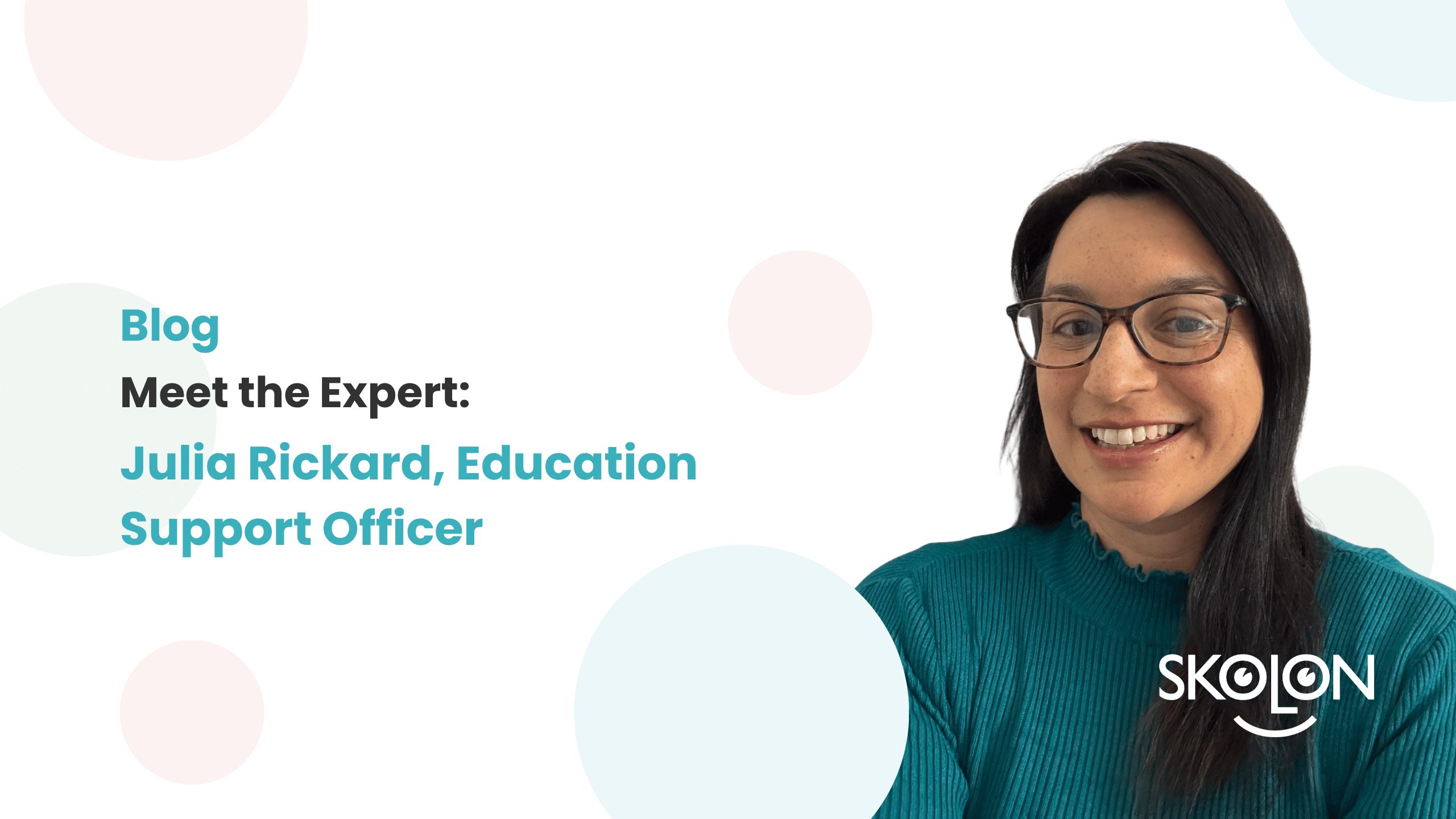
Meet the Expert: Julia Rickard, Education Support Officer
Author: Amber Lovell
Welcome back to Meet the Expert, our spin-off series where we move from the chaos of the classroom to the strategic minds shaping education behind the scenes.
This month, we’re heading to the northeast of Scotland to chat with a woman who describes her current role as a happy accident after a decade-long passion for digital pedagogy.
Meet Julia Rickard, an Education Support Officer for Aberdeenshire Council. From managing Minecraft competitions (yes, you read that right) to looking at Data Protection, Julia’s role is all about making technology work for the 35,000+ learners across her local authority.
From one-teacher schools to digital strategy
Julia’s journey into the central education team wasn’t exactly planned.
After 20 years in the classroom as a teacher and then Head Teacher, Julia she found herself drawn to the power of tech.
“I was in that position of being the headteacher, so I could decide how I wanted to invest my budget. I chose technology and iPads, getting to a stage where we had one-to-one devices. That passion for how tech can bring learning to life is what led me here.”
Now seconded to the central team for four years, Julia incredibly supports 170 schools across a massive geographic area. Her “typical” day, if there is such a thing in education, is a masterclass in juggling: one moment she’s judging Minecraft entries, the next she’s reviewing online safety policies or guiding schools through the maze of procurement regulations.

Goals and priorities: safety and accessibility
When asked about her current focus, Julia doesn’t hesitate at all, sharing that both online safety and accessibility are at the top of the agenda. Also of importance to Julia at present are:
Safer Schools Scotland: Julia is a fierce advocate for this app, which provides a “one-stop shop” for teachers, parents, and pupils to stay updated on the ever-changing digital landscape.
Device neutrality: Aberdeenshire doesn’t stick to just one brand. “Our children are going out into a big wide world where they might pick up a Windows machine, a Chromebook, or an iPad. We need to give them the skills to be confident on all of them.”
Upskilling the support network: Julia recently ran intensive training for Pupil Support Assistants (TAs). “They are the first line of defense. They’re the ones a child goes to when they can’t find a tool or a filter. We have to upskill the people around the child, not just the child themselves.”
Bringing history to life (30 seconds at a time)
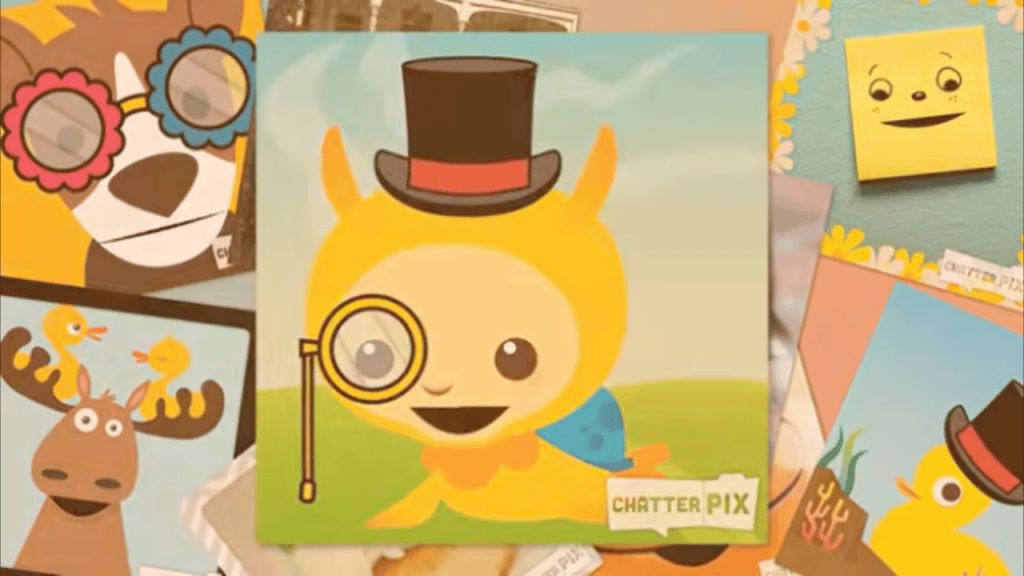
Julia’s favourite success story involves a simple iPad tool called ChatterPix and a lesson on WWII. Instead of a dry research project, her students became historical figures like Winston Churchill or Anne Frank.
The catch? The app only allowed 30 seconds of recording.
“The kids figured it out themselves. They recorded 30 seconds, saved it, did the next 30, and then stitched it all together in iMovie. They put on voices, used expressions, and moved from passive consumption to active creation. They were so proud to show those videos to their parents. This was when I first saw the incredible power of tech as a learning tool.”
The challenges of a “big spread”
Unsurprisingly, supporting 170 schools is no small feat, especially when the furthest school is a two-hour drive away, with that in mind, Julia has had to get creative with professional learning to make sure it’s inclusive for all, even in the most remote and rural areas.
Julia does this by facilitating online training, though she admits the “faceless” nature of webinars makes engagement hard to track, which is something everyone who’s hosted a webinar or virtual learning session could agree on.
Julia is also an advocate for EdPuzzle; using bite-sized videos and digital badges so teachers can learn in their own time.
The true validation of this ‘big spread’ strategy doesn’t come from a completed webinar checklist, but from The ‘Human’ Touch.
As Julia puts it: ‘I love it when a teacher gives me a shout to say they used AI to create a social story for a pupil and it worked. Knowing you’ve made their life a little easier – that’s what it’s all about.’
The magic wand: a safer online world
If Julia could wave a magic wand and solve one problem in education, she’d look beyond the school gates to the accountability of social media giants.
“The content pushed to my 14-year-old son is vastly different from what is pushed to me as a woman in my 40s. As a mum, I might think he’s seeing cat videos, like me, but the algorithms might be pushing misogynistic content within minutes. I’d use my wand to make the online world a safer, more regulated place for everyone.”
Julia’s words of wisdom for educators:
Be adaptable: Don’t get stuck with a tool just because you’ve used it for 15 years. If it’s no longer fit for purpose, move on.
Focus on content, not just handwriting: Technology can remove the physical barriers of “neatness” so a child can focus on the brilliance of their ideas.
Find your community: Networking is how we survive the rapid pace of EdTech change.
Want to learn more about digital pedagogy in Aberdeenshire? You can find out more about the work Julia and her team are doing by following the Aberdeenshire Council education updates.
Do you know an inspiring educator or industry expert we should feature next? Click here to nominate them!
This is Skolon – we gather the best digital educational tools and make them work in the classroom.
Skolon is an independent platform for digital educational tools and learning resources, created for both teachers and students. With Skolon, accessing and using your digital educational tools is easy – security increases, administration decreases, and there’s more time for learning.
The digital educational tools come from both small and large providers, all of whom have one thing in common – they create digital educational tools that are beneficial for the school environment.
Information
Author: Amber Lovell
Share this story
Subscribe
Would you like our newest articles delivered to your inbox? Sign up now!
Welcome back to Meet the Expert, our spin-off series where we move from the chaos of the classroom to the strategic minds shaping education behind the scenes.
This month, we’re heading to the northeast of Scotland to chat with a woman who describes her current role as a happy accident after a decade-long passion for digital pedagogy.
Meet Julia Rickard, an Education Support Officer for Aberdeenshire Council. From managing Minecraft competitions (yes, you read that right) to looking at Data Protection, Julia’s role is all about making technology work for the 35,000+ learners across her local authority.
From one-teacher schools to digital strategy
Julia’s journey into the central education team wasn’t exactly planned.
After 20 years in the classroom as a teacher and then Head Teacher, Julia she found herself drawn to the power of tech.
“I was in that position of being the headteacher, so I could decide how I wanted to invest my budget. I chose technology and iPads, getting to a stage where we had one-to-one devices. That passion for how tech can bring learning to life is what led me here.”
Now seconded to the central team for four years, Julia incredibly supports 170 schools across a massive geographic area. Her “typical” day, if there is such a thing in education, is a masterclass in juggling: one moment she’s judging Minecraft entries, the next she’s reviewing online safety policies or guiding schools through the maze of procurement regulations.
Goals and priorities: safety and accessibility
When asked about her current focus, Julia doesn’t hesitate at all, sharing that both online safety and accessibility are at the top of the agenda. Also of importance to Julia at present are:
Safer Schools Scotland: Julia is a fierce advocate for this app, which provides a “one-stop shop” for teachers, parents, and pupils to stay updated on the ever-changing digital landscape.
Device neutrality: Aberdeenshire doesn’t stick to just one brand. “Our children are going out into a big wide world where they might pick up a Windows machine, a Chromebook, or an iPad. We need to give them the skills to be confident on all of them.”
Upskilling the support network: Julia recently ran intensive training for Pupil Support Assistants (TAs). “They are the first line of defense. They’re the ones a child goes to when they can’t find a tool or a filter. We have to upskill the people around the child, not just the child themselves.”
Bringing history to life (30 seconds at a time)
Julia’s favourite success story involves a simple iPad tool called ChatterPix and a lesson on WWII. Instead of a dry research project, her students became historical figures like Winston Churchill or Anne Frank.
The catch? The app only allowed 30 seconds of recording.
“The kids figured it out themselves. They recorded 30 seconds, saved it, did the next 30, and then stitched it all together in iMovie. They put on voices, used expressions, and moved from passive consumption to active creation. They were so proud to show those videos to their parents. This was when I first saw the incredible power of tech as a learning tool.”
The challenges of a “big spread”
Unsurprisingly, supporting 170 schools is no small feat, especially when the furthest school is a two-hour drive away, with that in mind, Julia has had to get creative with professional learning to make sure it’s inclusive for all, even in the most remote and rural areas.
Julia does this by facilitating online training, though she admits the “faceless” nature of webinars makes engagement hard to track, which is something everyone who’s hosted a webinar or virtual learning session could agree on.
Julia is also an advocate for EdPuzzle; using bite-sized videos and digital badges so teachers can learn in their own time.
The true validation of this ‘big spread’ strategy doesn’t come from a completed webinar checklist, but from The ‘Human’ Touch.
As Julia puts it: ‘I love it when a teacher gives me a shout to say they used AI to create a social story for a pupil and it worked. Knowing you’ve made their life a little easier – that’s what it’s all about.’
The magic wand: a safer online world
If Julia could wave a magic wand and solve one problem in education, she’d look beyond the school gates to the accountability of social media giants.
“The content pushed to my 14-year-old son is vastly different from what is pushed to me as a woman in my 40s. As a mum, I might think he’s seeing cat videos, like me, but the algorithms might be pushing misogynistic content within minutes. I’d use my wand to make the online world a safer, more regulated place for everyone.”
Julia’s words of wisdom for educators:
Be adaptable: Don’t get stuck with a tool just because you’ve used it for 15 years. If it’s no longer fit for purpose, move on.
Focus on content, not just handwriting: Technology can remove the physical barriers of “neatness” so a child can focus on the brilliance of their ideas.
Find your community: Networking is how we survive the rapid pace of EdTech change.
Want to learn more about digital pedagogy in Aberdeenshire? You can find out more about the work Julia and her team are doing by following the Aberdeenshire Council education updates.
Do you know an inspiring educator or industry expert we should feature next? Click here to nominate them!
This is Skolon – we gather the best digital educational tools and make them work in the classroom.
Skolon is an independent platform for digital educational tools and learning resources, created for both teachers and students. With Skolon, accessing and using your digital educational tools is easy – security increases, administration decreases, and there’s more time for learning.
The digital educational tools come from both small and large providers, all of whom have one thing in common – they create digital educational tools that are beneficial for the school environment.
Share this story
Subscribe
Would you like our newest articles delivered to your inbox? Sign up now!