Meet the Expert: Amy Warner Allen
Author: Amber Lovell
Welcome to the latest edition of Meet the Expert, a spin-off to our beloved Meet the Educator series!
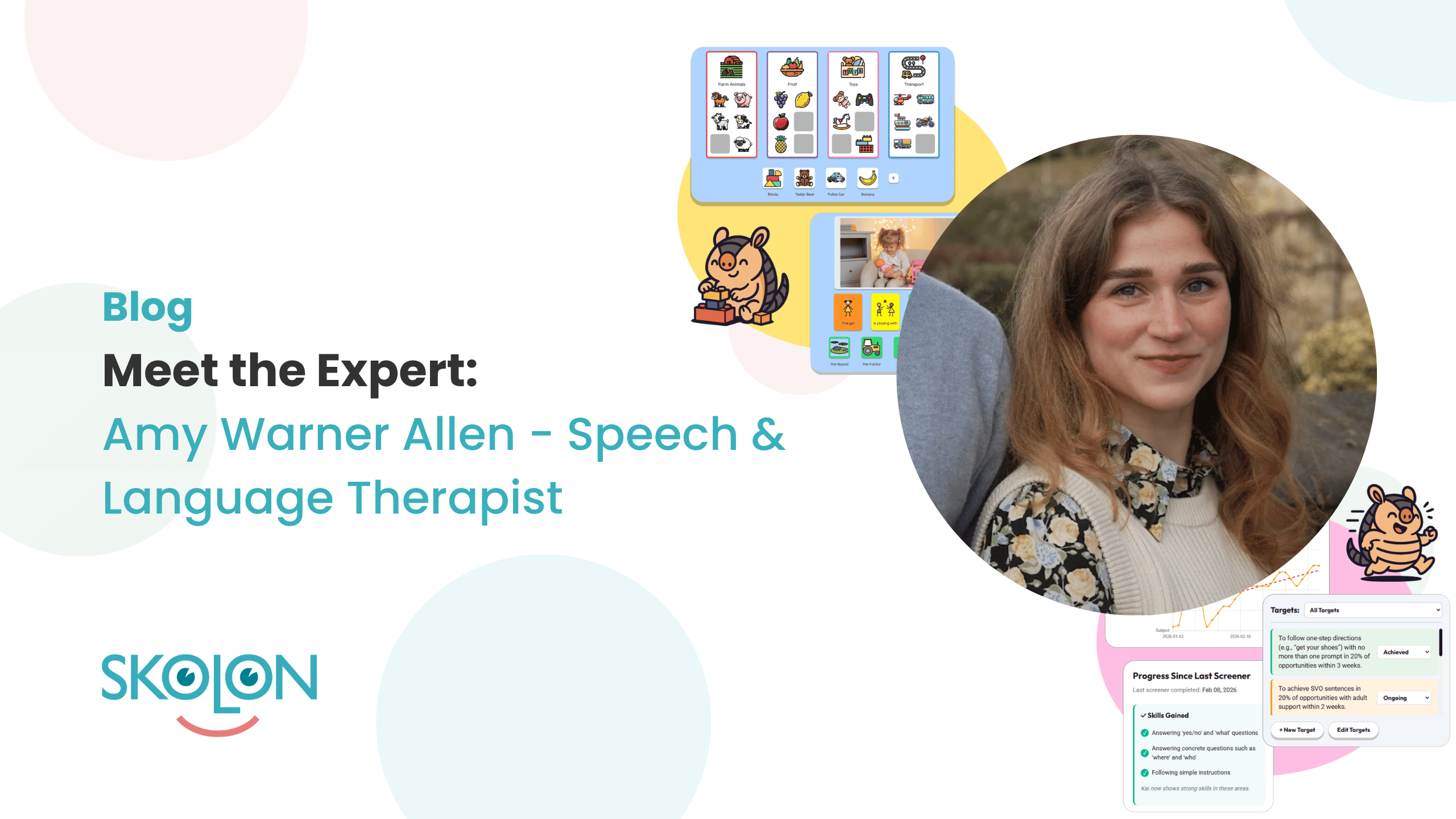
Recently, we were fortunate enough to get the chance to sit down with Amy Warner Allen, one of the masterminds behind Chatterdillo, an innovative ed-tech platform designed to deliver essential speech and language interventions.
Amy, a qualified Speech and Language Therapist and the co-creator of the digital learning tool took us through navigating massive paper resource packs as a teaching assistant to building a digital platform that saves educators hours of prep time. Additionally, Amy took the time to share her journey, the importance of evidence-based gamification, and her vision for the future of accessible speech therapy.
Here is our conversation with Amy:
Amber: Can you share a bit about your background in speech and language therapy, and what ultimately inspired the creation of Chatterdillo?
Amy: I used to work as a one-to-one teaching assistant, which is how I was first exposed to speech and language therapy. I worked with a girl with Down syndrome who needed daily interventions. I fell in love with it and eventually did my master’s in Speech and Language Therapy. Over the past five years, I’ve worked with both kids and adults, though mostly with children.
Chaterdillo was born from my time as a teaching assistant. I was handed a massive booklet of speech and language resources and told to just “crack on.” I had no experience, no idea what I was doing, and wasn’t told which interventions were appropriate. As I spoke to others in the industry, I realised teaching staff are often expected to provide specialist interventions without adequate training.
Even as a qualified therapist going into schools later on, teachers would tell me interventions weren’t happening because they were unsure how to carry them out.
I approached Jamie, who has a background in software engineering, and we decided to create Chatterdillo to solve this problem and ensure kids get the interventions they need.
Amber: That’s an incredible pivot! Have you always wanted to do speech and language therapy?
Amy: Oh my goodness, no! I originally wanted to be an actor. I went to drama school and did a degree in acting. I completely fell into speech and language therapy; I hadn’t even heard of it before that teaching assistant job. It was a happy accident, but I found it much more fulfilling than acting.
Bridging the gap in care
Amber: Accessing timely speech and language therapy is a real challenge right now. How does Chatterdillo aim to bridge that gap?
Amy: The earlier you intervene with communication difficulties, the better the outcome. Currently, NHS waitlists for an initial assessment can be between 12 and 18 months. If a two- or three-year-old goes a whole school year unable to communicate well, it has a significant knock-on effect on their socialisation, well-being, and ability to access the curriculum.
We aren’t trying to replace NHS speech and language therapy; you can’t do that. We are trying to fill the gap. Chaterdillo helps schools use our built-in screener to identify children with needs and provides personalised interventions to support them while they are on those waitlists.
Gamification vs. gimmicks
Amber: How important is gamification and child-led motivation when it comes to delivering these interventions?
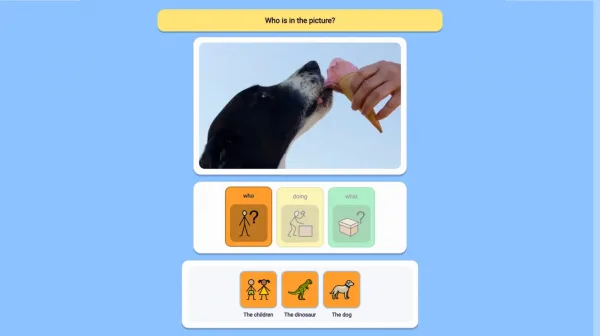
Amy: It’s super important. Evidence shows people learn best when they aren’t necessarily aware they’re learning. The more fun you have, the more motivated you are to engage, which leads to better outcomes. Making it fun makes children want to come back and do more exercises.
However, there is a fine line. You can’t just have kids playing games for the sake of it. It has to be rooted in evidence. All of our interventions are evidence-based, focusing on actual learning and developing language skills, rather than just clicking a button for a reward.
Reducing workload for educators
Amber: How do Chaterdillo’s built-in screener and automated exercises help reduce planning time for busy school staff?
Amy: Teachers already have so much on their plates. We didn’t want to hand them another massive task. Everything on Chatterdillo is straightforward.
You just click a button and run with it; all the tutorials are built into the program.
When I did interventions as a teaching assistant, I had to print, cut, and laminate everything. I’d turn up with massive bags of prep work. Chatterdillo cuts all of that out. Some of the schools currently using our platform have reported saving up to 3 hours per week. That extra time means more children can be seen!
Connecting school and home
Amber: Chatterdillo allows parents to access practice activities from home using a unique code. Why is building this bridge so important?
Amy: It’s like taking piano lessons. If you only practice the piano once a week at school, you will progress, but it takes much longer. If you practice at home too, you embed those skills into your daily life. Practicing language skills in different environments with different people helps make those skills transferable.
Amber: And how do you ensure the platform caters to a diverse range of needs?
Amy: Speech and language is highly complex; no two presentations are exactly the same. We have exercises spanning Early Years, Key Stage 1, and Key Stage 2 that build upon one another. Our program is heavily based on Blank’s Level Questions, which target vocabulary and verbal reasoning skills. Everybody needs those foundational skills, which allows the tool to be used by a huge range of people with varying needs.
Success stories & advice
Amber: Do you have a favorite success story or standout moment you can share?
Amy: One of our early pieces of feedback really stuck with Jamie and me. A school told us about a child with selective mutism who was completely nonverbal. Since using Chatterdillo for their interventions, that child has started speaking independently. Hearing that we built something that made such a massive difference in someone’s life was amazing. We actually went out for dinner to celebrate!
Amber: Starting specialised interventions can be daunting for educators. What advice do you have for teaching staff who feel apprehensive?
Amy: It can be scary when you do something for the first time, and you might worry about messing up. I was scared doing my first intervention as a TA! But if you are nervous, it means you care. Just do it. Nothing bad is going to happen, and you’ll likely realise it’s completely fine and straightforward. Even just giving it a go and doing your best is so much better than doing nothing at all.
Looking to the future
Amber: What is your ultimate vision for Chatterdillo, and what new features can educators look forward to?
Amy: The ultimate goal is for Chatterdillo to be the go-to online speech and language intervention platform used by schools and parents widely across the UK.
We’ve recently rolled out a bunch of updates! We’ve made the platform even easier for teaching staff, updated our screener, and added avatar customisation. Kids can now choose a character and make a profile, which I think is so cool. In the future, we want to expand that so kids can spend the experience points they earn to buy things for their avatars and dress them up. The speech therapy is the most important part, but little things like that make the journey so much more fun!
We’d like to extend a huge thank you to Amy for taking the time to share her incredible journey and the inspiring vision behind Chatterdillo!
If you are ready to reduce your prep time and start delivering vital, evidence-based speech and language interventions in your classroom, you can access Chatterdillo through Skolon today. Simply click the button below to find out how to get started.
Information
Author: Amber Lovell
Share this story
Subscribe
Would you like our newest articles delivered to your inbox? Sign up now!
Welcome to the latest edition of Meet the Expert, a spin-off to our beloved Meet the Educator series!
Recently, we were fortunate enough to get the chance to sit down with Amy Warner Allen, one of the masterminds behind Chatterdillo, an innovative ed-tech platform designed to deliver essential speech and language interventions.
Amy, a qualified Speech and Language Therapist and the co-creator of the digital learning tool took us through navigating massive paper resource packs as a teaching assistant to building a digital platform that saves educators hours of prep time. Additionally, Amy took the time to share her journey, the importance of evidence-based gamification, and her vision for the future of accessible speech therapy.
Here is our conversation with Amy:
Amber: Can you share a bit about your background in speech and language therapy, and what ultimately inspired the creation of Chatterdillo?
Amy: I used to work as a one-to-one teaching assistant, which is how I was first exposed to speech and language therapy. I worked with a girl with Down syndrome who needed daily interventions. I fell in love with it and eventually did my master’s in Speech and Language Therapy. Over the past five years, I’ve worked with both kids and adults, though mostly with children.
Chaterdillo was born from my time as a teaching assistant. I was handed a massive booklet of speech and language resources and told to just “crack on.” I had no experience, no idea what I was doing, and wasn’t told which interventions were appropriate. As I spoke to others in the industry, I realised teaching staff are often expected to provide specialist interventions without adequate training.
Even as a qualified therapist going into schools later on, teachers would tell me interventions weren’t happening because they were unsure how to carry them out.
I approached Jamie, who has a background in software engineering, and we decided to create Chatterdillo to solve this problem and ensure kids get the interventions they need.
Amber: That’s an incredible pivot! Have you always wanted to do speech and language therapy?
Amy: Oh my goodness, no! I originally wanted to be an actor. I went to drama school and did a degree in acting. I completely fell into speech and language therapy; I hadn’t even heard of it before that teaching assistant job. It was a happy accident, but I found it much more fulfilling than acting.
Bridging the gap in care
Amber: Accessing timely speech and language therapy is a real challenge right now. How does Chatterdillo aim to bridge that gap?
Amy: The earlier you intervene with communication difficulties, the better the outcome. Currently, NHS waitlists for an initial assessment can be between 12 and 18 months. If a two- or three-year-old goes a whole school year unable to communicate well, it has a significant knock-on effect on their socialisation, well-being, and ability to access the curriculum.
We aren’t trying to replace NHS speech and language therapy; you can’t do that. We are trying to fill the gap. Chaterdillo helps schools use our built-in screener to identify children with needs and provides personalised interventions to support them while they are on those waitlists.
Gamification vs. gimmicks
Amber: How important is gamification and child-led motivation when it comes to delivering these interventions?
Amy: It’s super important. Evidence shows people learn best when they aren’t necessarily aware they’re learning. The more fun you have, the more motivated you are to engage, which leads to better outcomes. Making it fun makes children want to come back and do more exercises.
However, there is a fine line. You can’t just have kids playing games for the sake of it. It has to be rooted in evidence. All of our interventions are evidence-based, focusing on actual learning and developing language skills, rather than just clicking a button for a reward.
Reducing workload for educators
Amber: How do Chaterdillo’s built-in screener and automated exercises help reduce planning time for busy school staff?
Amy: Teachers already have so much on their plates. We didn’t want to hand them another massive task. Everything on Chatterdillo is straightforward.
You just click a button and run with it; all the tutorials are built into the program.
When I did interventions as a teaching assistant, I had to print, cut, and laminate everything. I’d turn up with massive bags of prep work. Chatterdillo cuts all of that out. Some of the schools currently using our platform have reported saving up to 3 hours per week. That extra time means more children can be seen!
Connecting school and home
Amber: Chatterdillo allows parents to access practice activities from home using a unique code. Why is building this bridge so important?
Amy: It’s like taking piano lessons. If you only practice the piano once a week at school, you will progress, but it takes much longer. If you practice at home too, you embed those skills into your daily life. Practicing language skills in different environments with different people helps make those skills transferable.
Amber: And how do you ensure the platform caters to a diverse range of needs?
Amy: Speech and language is highly complex; no two presentations are exactly the same. We have exercises spanning Early Years, Key Stage 1, and Key Stage 2 that build upon one another. Our program is heavily based on Blank’s Level Questions, which target vocabulary and verbal reasoning skills. Everybody needs those foundational skills, which allows the tool to be used by a huge range of people with varying needs.
Success stories & advice
Amber: Do you have a favorite success story or standout moment you can share?
Amy: One of our early pieces of feedback really stuck with Jamie and me. A school told us about a child with selective mutism who was completely nonverbal. Since using Chatterdillo for their interventions, that child has started speaking independently. Hearing that we built something that made such a massive difference in someone’s life was amazing. We actually went out for dinner to celebrate!
Amber: Starting specialised interventions can be daunting for educators. What advice do you have for teaching staff who feel apprehensive?
Amy: It can be scary when you do something for the first time, and you might worry about messing up. I was scared doing my first intervention as a TA! But if you are nervous, it means you care. Just do it. Nothing bad is going to happen, and you’ll likely realise it’s completely fine and straightforward. Even just giving it a go and doing your best is so much better than doing nothing at all.
Looking to the future
Amber: What is your ultimate vision for Chatterdillo, and what new features can educators look forward to?
Amy: The ultimate goal is for Chatterdillo to be the go-to online speech and language intervention platform used by schools and parents widely across the UK.
We’ve recently rolled out a bunch of updates! We’ve made the platform even easier for teaching staff, updated our screener, and added avatar customisation. Kids can now choose a character and make a profile, which I think is so cool. In the future, we want to expand that so kids can spend the experience points they earn to buy things for their avatars and dress them up. The speech therapy is the most important part, but little things like that make the journey so much more fun!
We’d like to extend a huge thank you to Amy for taking the time to share her incredible journey and the inspiring vision behind Chatterdillo!
If you are ready to reduce your prep time and start delivering vital, evidence-based speech and language interventions in your classroom, you can access Chatterdillo through Skolon today. Simply click the button below to find out how to get started.
Share this story
Subscribe
Would you like our newest articles delivered to your inbox? Sign up now!