Why creativity matters more than ever in the age of AI
Sponsored article
Sponsored article
Sponsored article
Budgets everywhere are under scrutiny and pressure, and education is no exception, especially when it comes to creative subjects, which always seem to feel the pinch first. But, as artificial intelligence (AI) weaves its way into an increasingly familiar part of our everyday lives, it’s worth asking: ‘could creativity actually be one of the things schools need to invest in most?’
For Angelica Bolle, the answer is clear:
“I think that now when we live in the whole AI world, these soft skills and creative skills are the ones we need to teach the kids because this is what makes us human and what makes us different from an AI bot.”
As Head of Partnerships, EMEA & APAC at Soundtrap, Angelica has seen first-hand how creative technology can give students new ways to make, collaborate and express themselves.
And it’s clear that creative thinking is only going to become more important.
“I think when it comes to creative thinking, for example, that’s going to be so much more important in 10 years than it was 20 years ago, because this is what only humans can do – to think creatively and think about the human experience and the arts and the expression.”
Creativity isn’t an added extra
There’s a real ‘take it or leave it’ attitude sometimes when it comes to the arts, and it can be seen in education too, as creativity is often treated as an addition to the wider curriculum – something valuable for sure, but perhaps less essential than subjects with more easily measured outcomes.
Yet Angelica sees it differently:
“I think it’s because it’s more of what they call a soft skill, which is hard to measure.”
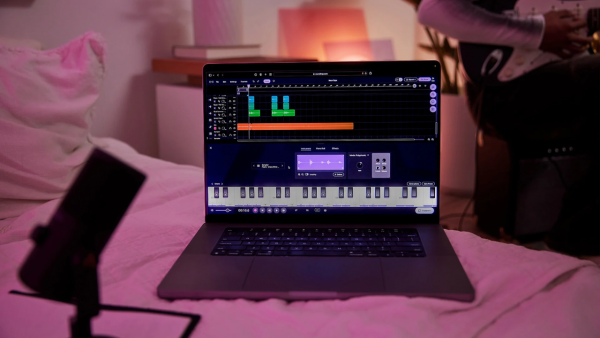
It is worth noting, difficulty measuring something doesn’t necessarily make it any less important. In fact, for Angelica, creative technology can play a role far beyond simply teaching students how to make music.
Soundtrap has taken an extra step and expanded from its roots as a music-making platform into podcasting and video, giving students opportunities to create across different subjects and contexts.
That can mean a myriad of things, from producing a podcast for a language lesson, creating audio for a history project or scoring music to a video, enabling the technology to become a means of expression as opposed to an end goal.
Creativity, engagement and wellbeing
There is another reason Angelica believes schools should take creativity seriously: student wellbeing.
The need for schools to support children’s mental health has become increasingly clear. Although from 2017, as the latest NHS data shows, the proportion of 5–15-year-olds with a mental disorder increased from 9.7% in 1999 to 11.2% in 2017.
For Angelica, creativity can play an important role in giving young people a way to process and communicate what they are feeling.
“We have seen some really positive impacts with introducing more arts and giving them a platform to express themselves, express their feelings very early on.”
Soundtrap has worked with schools and organisations on initiatives that connect music with mental health awareness, supporting projects that use music as a way to promote wellbeing and open up conversations around mental health.
Indeed, creative expression can provide students with another way to communicate what they are experiencing.
“We have some schools where teachers have said that the only thing that is bringing in the kids to the classroom is to use a tool like Soundtrap because they think it’s so much fun.”
That doesn’t mean creative technology is the ultimate solution to every challenge facing schools, but it does highlight the value of giving students opportunities to engage with learning in different ways.
“And in schools it’s not always about the grades as well. It’s about the kids and their wellbeing. But also that’s hard to measure. But it’s so important.”
From the classroom to anywhere
Another part of making creativity accessible is removing unnecessary barriers around when and where students can create.
Soundtrap is cloud-based, meaning students can access their work across devices and continue creating outside the classroom. They can also collaborate with other students in their school on projects, which is a level of flexibility that truly matters in a world where learning increasingly extends beyond the traditional classroom.
As with all who are in EdTech for the right reasons, there are personal pulls that are the driving force behind what we do. For Angelica, the appeal of creative technology is also personal. During high school in Sweden, she chose a media-focused pathway and created her own music video, which is something that has stayed with her.
“I personally love music videos. I was an MTV girl. I would go home every day after school and I would watch MTV.”
More recently, Soundtrap’s new video tool has given her the opportunity to relive her youth and recreate that experience with today’s technology.
“I did my own little music video and it was very fun.”
The tools may have changed considerably since Angelica was at school, but the underlying idea hasn’t: give young people the opportunity to create something of their own.
What’s Soundtrap’s new video feature, and how does it work?
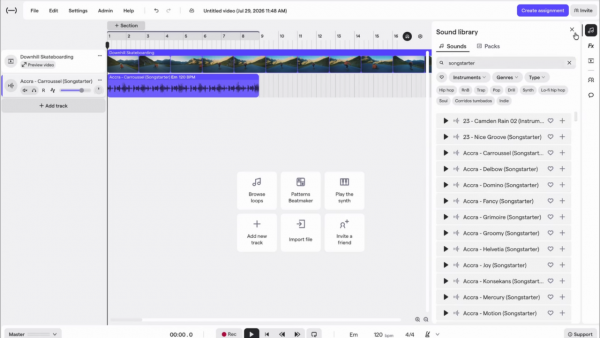
Soundtrap’s new Video Scoring feature enables students compose music directly to video, using Soundtrap’s browser-based studio on any school device, including Chromebooks.
Students can choose a clip from the built-in video library, add music, sound effects, narration and Foley to the timeline, and watch their score come together alongside the footage.
With ready-to-teach lesson plans, collaborative tools and MP4 export, it gives students a simple way to turn their interpretation of a scene into something they can hear, see and share.
Making creativity easier to access
Whilst there are many challenges and barriers in education, in this instance, the challenge isn’t simply convincing schools that creativity matters, it’s making creative opportunities practical, accessible and easy to introduce.
That is ultimately where Angelica sees technology playing an important role. That means technology needs to work for teachers and students rather than becoming another layer of complexity.
For Angelica, the opportunity is to make creativity part of everyday learning rather than something schools have to find extra time, money or technical expertise to accommodate.
“I think now more than ever it’s more relevant to introduce more arts into schools.”
And we agree.
As AI continues to reshape education and the workplace, one of the most important conversations schools can have is: not just what technology can do, but what it allows young people to do.
This is Skolon – we gather the best digital educational tools and make them work in the classroom.
Skolon is an independent platform for digital educational tools and learning resources, created for both teachers and students. With Skolon, accessing and using your digital educational tools is easy – security increases, administration decreases, and there’s more time for learning.
The digital educational tools come from both small and large providers, all of whom have one thing in common – they create digital educational tools that are beneficial for the school environment.
Information
Share this story
Subscribe
Budgets everywhere are under scrutiny and pressure, and education is no exception, especially when it comes to creative subjects, which always seem to feel the pinch first. But, as artificial intelligence (AI) weaves its way into an increasingly familiar part of our everyday lives, it’s worth asking: ‘could creativity actually be one of the things schools need to invest in most?’
For Angelica Bolle, the answer is clear:
“I think that now when we live in the whole AI world, these soft skills and creative skills are the ones we need to teach the kids because this is what makes us human and what makes us different from an AI bot.”
As Head of Partnerships, EMEA & APAC at Soundtrap, Angelica has seen first-hand how creative technology can give students new ways to make, collaborate and express themselves.
And it’s clear that creative thinking is only going to become more important.
“I think when it comes to creative thinking, for example, that’s going to be so much more important in 10 years than it was 20 years ago, because this is what only humans can do – to think creatively and think about the human experience and the arts and the expression.”
Creativity isn’t an added extra
There’s a real ‘take it or leave it’ attitude sometimes when it comes to the arts, and it can be seen in education too, as creativity is often treated as an addition to the wider curriculum – something valuable for sure, but perhaps less essential than subjects with more easily measured outcomes.
Yet Angelica sees it differently:
“I think it’s because it’s more of what they call a soft skill, which is hard to measure.”
It is worth noting, difficulty measuring something doesn’t necessarily make it any less important. In fact, for Angelica, creative technology can play a role far beyond simply teaching students how to make music.
Soundtrap has taken an extra step and expanded from its roots as a music-making platform into podcasting and video, giving students opportunities to create across different subjects and contexts.
That can mean a myriad of things, from producing a podcast for a language lesson, creating audio for a history project or scoring music to a video, enabling the technology to become a means of expression as opposed to an end goal.
Creativity, engagement and wellbeing
There is another reason Angelica believes schools should take creativity seriously: student wellbeing.
The need for schools to support children’s mental health has become increasingly clear. Although from 2017, as the latest NHS data shows, the proportion of 5–15-year-olds with a mental disorder increased from 9.7% in 1999 to 11.2% in 2017.
For Angelica, creativity can play an important role in giving young people a way to process and communicate what they are feeling.
“We have seen some really positive impacts with introducing more arts and giving them a platform to express themselves, express their feelings very early on.”
Soundtrap has worked with schools and organisations on initiatives that connect music with mental health awareness, supporting projects that use music as a way to promote wellbeing and open up conversations around mental health.
Indeed, creative expression can provide students with another way to communicate what they are experiencing.
“We have some schools where teachers have said that the only thing that is bringing in the kids to the classroom is to use a tool like Soundtrap because they think it’s so much fun.”
That doesn’t mean creative technology is the ultimate solution to every challenge facing schools, but it does highlight the value of giving students opportunities to engage with learning in different ways.
“And in schools it’s not always about the grades as well. It’s about the kids and their wellbeing. But also that’s hard to measure. But it’s so important.”
From the classroom to anywhere
Another part of making creativity accessible is removing unnecessary barriers around when and where students can create.
Soundtrap is cloud-based, meaning students can access their work across devices and continue creating outside the classroom. They can also collaborate with other students in their school on projects, which is a level of flexibility that truly matters in a world where learning increasingly extends beyond the traditional classroom.
As with all who are in EdTech for the right reasons, there are personal pulls that are the driving force behind what we do. For Angelica, the appeal of creative technology is also personal. During high school in Sweden, she chose a media-focused pathway and created her own music video, which is something that has stayed with her.
“I personally love music videos. I was an MTV girl. I would go home every day after school and I would watch MTV.”
More recently, Soundtrap’s new video tool has given her the opportunity to relive her youth and recreate that experience with today’s technology.
“I did my own little music video and it was very fun.”
The tools may have changed considerably since Angelica was at school, but the underlying idea hasn’t: give young people the opportunity to create something of their own.
What’s Soundtrap’s new video feature, and how does it work?
Soundtrap’s new Video Scoring feature enables students compose music directly to video, using Soundtrap’s browser-based studio on any school device, including Chromebooks.
Students can choose a clip from the built-in video library, add music, sound effects, narration and Foley to the timeline, and watch their score come together alongside the footage.
With ready-to-teach lesson plans, collaborative tools and MP4 export, it gives students a simple way to turn their interpretation of a scene into something they can hear, see and share.
Making creativity easier to access
Whilst there are many challenges and barriers in education, in this instance, the challenge isn’t simply convincing schools that creativity matters, it’s making creative opportunities practical, accessible and easy to introduce.
That is ultimately where Angelica sees technology playing an important role. That means technology needs to work for teachers and students rather than becoming another layer of complexity.
For Angelica, the opportunity is to make creativity part of everyday learning rather than something schools have to find extra time, money or technical expertise to accommodate.
“I think now more than ever it’s more relevant to introduce more arts into schools.”
And we agree.
As AI continues to reshape education and the workplace, one of the most important conversations schools can have is: not just what technology can do, but what it allows young people to do.
This is Skolon – we gather the best digital educational tools and make them work in the classroom.
Skolon is an independent platform for digital educational tools and learning resources, created for both teachers and students. With Skolon, accessing and using your digital educational tools is easy – security increases, administration decreases, and there’s more time for learning.
The digital educational tools come from both small and large providers, all of whom have one thing in common – they create digital educational tools that are beneficial for the school environment.
Share this story
Subscribe