It’s 2026… Why haven’t you streamlined your digital ecosystem?
Author: Amber Lovell
It’s not a trick question, nor is it rhetorical, we’re just genuinely interested in your answer, because most schools and Multi Academy Trusts of course recognise the value of a connected digital environment.
However, there are still a fair amount of them managing a growing collection of platforms, logins, contracts, and processes that oftentimes don’t work together as smoothly as they could.
Could it be a lack of time?
Mayhaps competing priorities have pushed it down the agenda?
Or maybe the challenge of bringing multiple systems, stakeholders, and suppliers together simply feels too complex to tackle right now?
It could be one, none, or all of them.
Regardless of the reason, the stark reality is that an unconnected digital ecosystem can create an unnecessary workload, increase security risks, and make it harder for staff and students to get the most from the technology you’ve invested in.
Read on to discover why streamlining your digital ecosystem should be a strategic priority, and how a more connected approach to technology can deliver benefits across your organisation, from improving operational efficiency and security to enhancing teaching, learning, and staff wellbeing.
What ‘things’ are included in your digital ecosystem?
There’s no shame here.
Sometimes we speak with leaders who don’t fully realise the breadth of what sits within their digital ecosystem, like that random drawer in their kitchen, and that’s completely understandable. Over time, systems are added to solve individual problems, often by different departments, at different times, with different priorities in mind.
Your ecosystem isn’t just your MIS or your learning platform. It includes key components such as: assessment tools, safeguarding systems, curriculum resources, communication apps, identity management tools, cloud storage, and even the smaller, department-led platforms that quietly become essential to day-to-day teaching and learning.
Individually, each of these tools serve a clear purpose, but collectively, they form the environment your staff and students navigate every single day. And without a clear view of how they connect, it becomes difficult to manage access, maintain consistency, or understand the true scale of what you’re supporting.

The hidden cost of digital fragmentation
Taking the above tools into account, it’s really worth noting that fragmentation isn’t something that happens on purpose; it’s a gradual process that naturally occurs through growth more than anything.
The result, though, is complexity that nobody intended and a cost that isn’t only financial but, is also measured in friction that rather than empowering schools and trusts, it leaves them with strategic blind spots that prevent the holistic view of student progress, safeguarding, and the school/trust-wide operations necessary to make truly informed decisions.
Why this isn’t just an IT problem
It is tempting to look at a bloated software roster and dismiss it as a problem for Geoff in IT, but when digital systems don’t talk to each other, the friction creates an organisational bottleneck that manifests differently depending on where you sit at the org chart:
If you’re a director of education, for example, it’d be an outcomes problem. When attendance, behavior, academic progress, and safeguarding data live in separate, siloed platforms, tracking a pupil’s true trajectory becomes nigh on impossible, furthermore, it delays critical interventions and makes it harder to spot trust-wide trends.
Whereas if you’re a CFO, it’s a value problem where redundant licensing, administrative inefficiency, and “shadow IT” create a massive hidden financial drain.
Ultimately, a fragmented ecosystem keeps a Multi-Academy Trust operating as a loose collection of individual schools rather than a unified, efficient organisation.
Complexity is the enemy of adoption
The challenge for schools is no longer access to technology, but making it genuinely easy to use.
Even the strongest digital strategy will struggle if staff and pupils are constantly switching between logins, systems, and interfaces just to complete everyday tasks. Adoption rarely fails because people resist change; it fails because friction builds into their day until it simply isn’t sustainable. In the end, value is lost not through capability, but through complexity.

Security becomes harder as ecosystems grow
Additionally, every new platform brings another set of accounts, permissions, and data flows to manage. As systems multiply and become more disconnected, maintaining oversight becomes increasingly difficult. A joined-up approach helps bring everything into one place, making it easier to manage access, strengthen control, and reduce blind spots across the estate.
The most valuable resource you’re wasting is time
It’s rarely one big inefficiency that causes the problem, but hundreds of small ones. A few extra clicks, seconds, password resets, minutes and manual tasks repeated across multiple systems may individually feel insignificant, but across a trust they add up to a substantial loss of time. However, bringing systems together removes that friction and gives time back to staff where it matters most.
Streamlining doesn’t mean reducing choice
Now, it’s REALLY important to note that streamlining isn’t about removing tools or limiting innovation. It’s about making sure everything you already have and use works together properly. Schools and trusts can still choose best-in-class solutions, but those tools should sit within a connected environment rather than operating in isolated siloes.
The question every leader should be asking:
“Can I have the summer off?” might be the question on your lips but the one that should sit firmly in your mind is: If you were designing your digital ecosystem today, would you build it the way it currently looks?
For most leaders, the answer is no. But the solution isn’t to start from scratch; it’s to make what you already have work better together. For schools and Multi Academy Trusts, that means turning a disjointed collection of platforms into a single, joined-up experience.
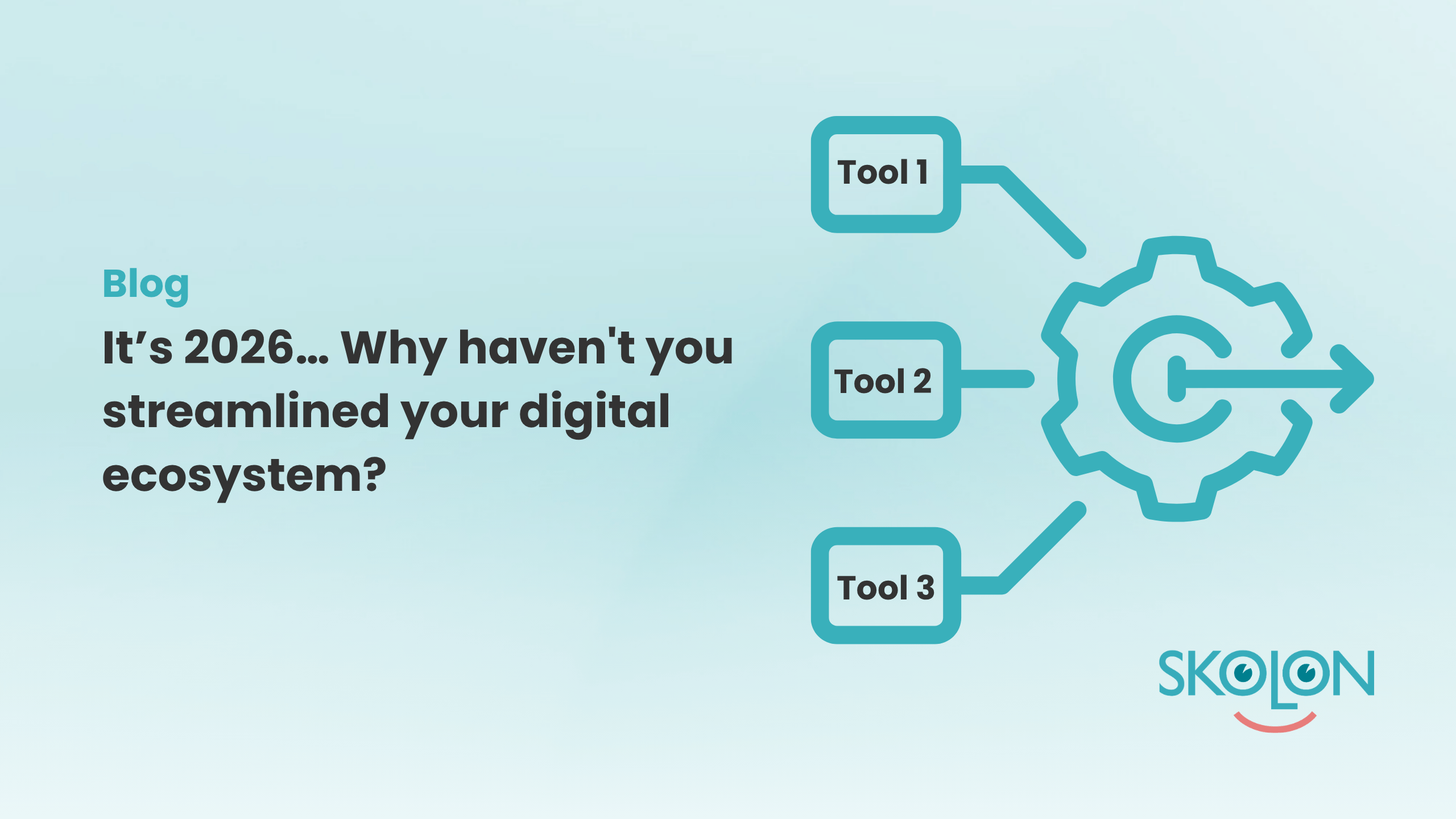
This is where Skolon comes in. By bringing your digital ecosystem into one secure place, it simplifies access, reduces the administrative burden, and creates a far more efficient environment for staff and students.
Rather than adding more to your tech stack, Skolon helps you get much more from what you already have.
This is Skolon – we gather the best digital educational tools and make them work in the classroom.
Skolon is an independent platform for digital educational tools and learning resources, created for both teachers and students. With Skolon, accessing and using your digital educational tools is easy – security increases, administration decreases, and there’s more time for learning.
The digital educational tools come from both small and large providers, all of whom have one thing in common – they create digital educational tools that are beneficial for the school environment.
Information
Author: Amber Lovell
Share this story
Subscribe
Would you like our newest articles delivered to your inbox? Sign up now!
It’s not a trick question, nor is it rhetorical, we’re just genuinely interested in your answer, because most schools and Multi Academy Trusts of course recognise the value of a connected digital environment.
However, there are still a fair amount of them managing a growing collection of platforms, logins, contracts, and processes that oftentimes don’t work together as smoothly as they could.
Could it be a lack of time?
Mayhaps competing priorities have pushed it down the agenda?
Or maybe the challenge of bringing multiple systems, stakeholders, and suppliers together simply feels too complex to tackle right now?
It could be one, none, or all of them.
Regardless of the reason, the stark reality is that an unconnected digital ecosystem can create an unnecessary workload, increase security risks, and make it harder for staff and students to get the most from the technology you’ve invested in.
Read on to discover why streamlining your digital ecosystem should be a strategic priority, and how a more connected approach to technology can deliver benefits across your organisation, from improving operational efficiency and security to enhancing teaching, learning, and staff wellbeing.
What ‘things’ are included in your digital ecosystem?
There’s no shame here.
Sometimes we speak with leaders who don’t fully realise the breadth of what sits within their digital ecosystem, like that random drawer in their kitchen, and that’s completely understandable. Over time, systems are added to solve individual problems, often by different departments, at different times, with different priorities in mind.
Your ecosystem isn’t just your MIS or your learning platform. It includes key components such as: assessment tools, safeguarding systems, curriculum resources, communication apps, identity management tools, cloud storage, and even the smaller, department-led platforms that quietly become essential to day-to-day teaching and learning.
Individually, each of these tools serve a clear purpose, but collectively, they form the environment your staff and students navigate every single day. And without a clear view of how they connect, it becomes difficult to manage access, maintain consistency, or understand the true scale of what you’re supporting.
The hidden cost of digital fragmentation
Taking the above tools into account, it’s really worth noting that fragmentation isn’t something that happens on purpose; it’s a gradual process that naturally occurs through growth more than anything.
The result, though, is complexity that nobody intended and a cost that isn’t only financial but, is also measured in friction that rather than empowering schools and trusts, it leaves them with strategic blind spots that prevent the holistic view of student progress, safeguarding, and the school/trust-wide operations necessary to make truly informed decisions.
Why this isn’t just an IT problem
It is tempting to look at a bloated software roster and dismiss it as a problem for Geoff in IT, but when digital systems don’t talk to each other, the friction creates an organisational bottleneck that manifests differently depending on where you sit at the org chart:
If you’re a director of education, for example, it’d be an outcomes problem. When attendance, behavior, academic progress, and safeguarding data live in separate, siloed platforms, tracking a pupil’s true trajectory becomes nigh on impossible, furthermore, it delays critical interventions and makes it harder to spot trust-wide trends.
Whereas if you’re a CFO, it’s a value problem where redundant licensing, administrative inefficiency, and “shadow IT” create a massive hidden financial drain.
Ultimately, a fragmented ecosystem keeps a Multi-Academy Trust operating as a loose collection of individual schools rather than a unified, efficient organisation.
Complexity is the enemy of adoption
The challenge for schools is no longer access to technology, but making it genuinely easy to use.
Even the strongest digital strategy will struggle if staff and pupils are constantly switching between logins, systems, and interfaces just to complete everyday tasks. Adoption rarely fails because people resist change; it fails because friction builds into their day until it simply isn’t sustainable. In the end, value is lost not through capability, but through complexity.
Security becomes harder as ecosystems grow
Additionally, every new platform brings another set of accounts, permissions, and data flows to manage. As systems multiply and become more disconnected, maintaining oversight becomes increasingly difficult. A joined-up approach helps bring everything into one place, making it easier to manage access, strengthen control, and reduce blind spots across the estate.
The most valuable resource you’re wasting is time
It’s rarely one big inefficiency that causes the problem, but hundreds of small ones. A few extra clicks, seconds, password resets, minutes and manual tasks repeated across multiple systems may individually feel insignificant, but across a trust they add up to a substantial loss of time. However, bringing systems together removes that friction and gives time back to staff where it matters most.
Streamlining doesn’t mean reducing choice
Now, it’s REALLY important to note that streamlining isn’t about removing tools or limiting innovation. It’s about making sure everything you already have and use works together properly. Schools and trusts can still choose best-in-class solutions, but those tools should sit within a connected environment rather than operating in isolated siloes.
The question every leader should be asking:
“Can I have the summer off?” might be the question on your lips but the one that should sit firmly in your mind is: If you were designing your digital ecosystem today, would you build it the way it currently looks?
For most leaders, the answer is no. But the solution isn’t to start from scratch; it’s to make what you already have work better together. For schools and Multi Academy Trusts, that means turning a disjointed collection of platforms into a single, joined-up experience.
This is where Skolon comes in. By bringing your digital ecosystem into one secure place, it simplifies access, reduces the administrative burden, and creates a far more efficient environment for staff and students.
Rather than adding more to your tech stack, Skolon helps you get much more from what you already have.
This is Skolon – we gather the best digital educational tools and make them work in the classroom.
Skolon is an independent platform for digital educational tools and learning resources, created for both teachers and students. With Skolon, accessing and using your digital educational tools is easy – security increases, administration decreases, and there’s more time for learning.
The digital educational tools come from both small and large providers, all of whom have one thing in common – they create digital educational tools that are beneficial for the school environment.
Share this story
Subscribe
Would you like our newest articles delivered to your inbox? Sign up now!