Meet the educator to meet the expert – Nici Foote revisited
Author: Amber Lovell
Welcome back to Meet the Educator – our monthly spotlight series where we share the real stories, insights, and everyday brilliance of educators across the country – except this time, our educator has been upgraded to the expert status!
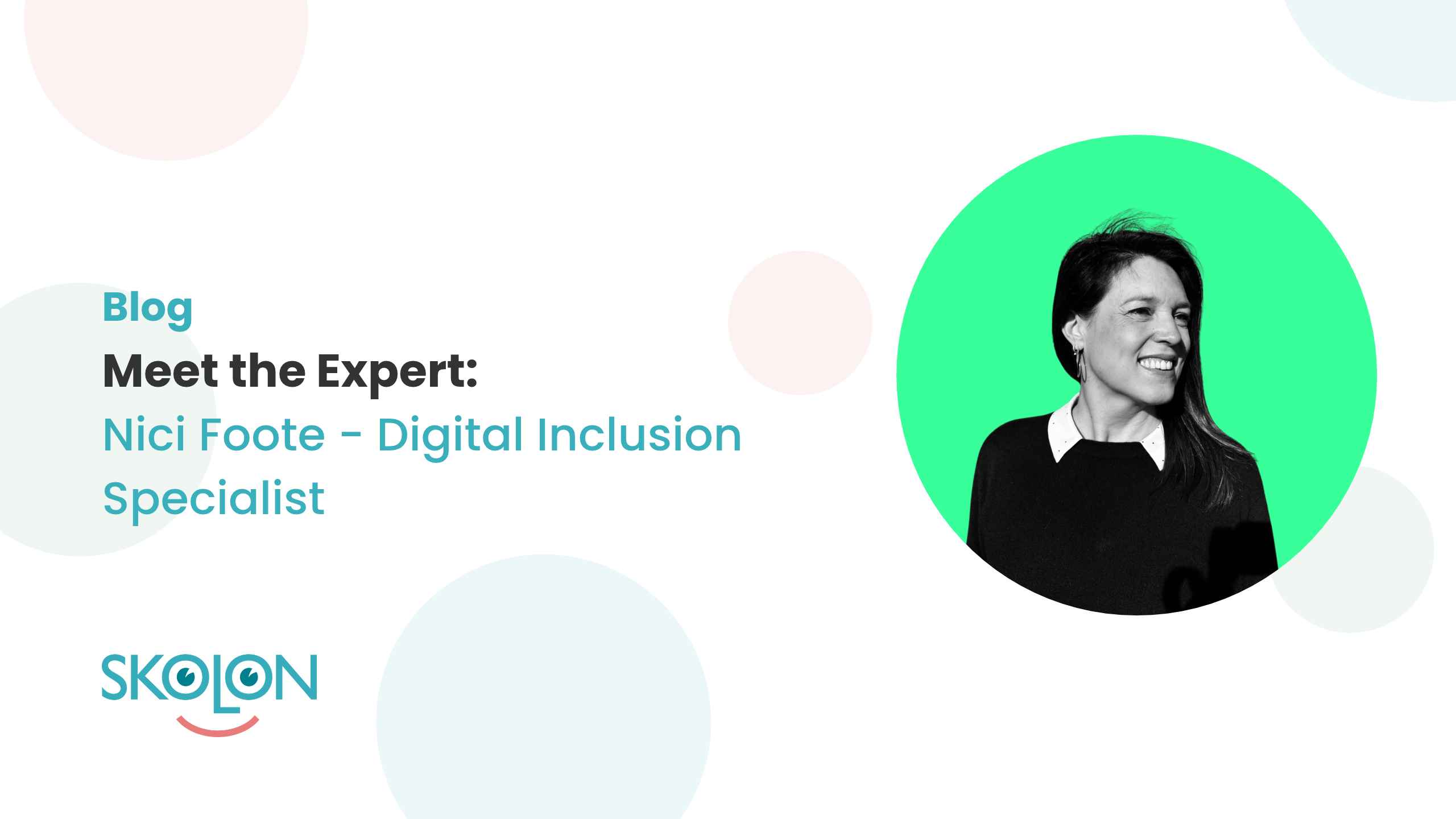
Last year, we introduced you to Nici Foote: educator, coach, founder of Unbarrier.Me and self-described “rule-breaker with a mission”, and a year on, a lot has changed.
Nici has continued to build Unbarrier.Me, working with schools and trusts to move inclusion from something we talk about to something we actively design, measure and embed. She’s also been closely following a significant shift in the education landscape: the DfE’s focus on whole-school inclusion through the Inclusion Mainstream Fund.
So, we caught up with Nici to find out what’s changed, what she’s learnt and why she believes the biggest opportunity for schools right now could be understanding what they don’t yet know about their learners.
From educator to expert
When we last spoke to Nici, she was “doubling down” on Unbarrier.Me. Since then, she says the journey has involved plenty of figuring things out.
“I think going into starting Unbarrier, I was absolutely passionate about change in education, but my skills, talents and strengths had been in so many different pockets over my work experience, so really working out where I needed to be was a bit of a jigsaw puzzle.”
That process has helped Nici define what Unbarrier.Me needs to be — and where she can have the most impact.
“For us at Unbarrier, it’s all about that learner voice. What decisions are we making? Are they reaching the child? And how do we know? Are we able to collect the data around what students are telling us, and are we listening?”
A shift towards whole-school inclusion
One of the biggest developments Nici has been watching is the DfE’s Inclusion Mainstream Fund.
For Nici, what makes this particularly interesting is its focus on inclusion across the whole school community, rather than viewing inclusion solely through the lens of SEND.
“This is the first time we’ve had money that’s really gone, ‘hold on a minute — do not look at SEND at all. We want you to look at ALL students.’”
She sees this as an opportunity for schools to take a step back and consider what inclusion actually looks like across their community, and she believes the funding should be about much more than simply deciding what to spend money on.
“It is not a shopping list,” she says. “I really want people to think about what’s actually happening.”
The fund’s principles give schools a framework to consider their own priorities, but Nici is keen to stress that schools shouldn’t simply work through them as a checklist.
Instead, she wants schools to connect them with their existing values, school development plans and evidence.
“Let’s really look at what our school values are. Let’s look at our school development plan. Let’s see where we cross-pollinate and where those themes align.”
Don’t rush it. Find out what you don’t know.
If Nici could give schools one piece of advice as they approach their inclusion work, it would be simple:
Don’t rush it.
Schools have a relatively short window to develop and publish their inclusion strategy statements, but Nici believes the pressure to produce something quickly shouldn’t come at the expense of meaningful reflection.
“This is an opportunity for you to slow down and say, ‘What do we really want to know?’”
And one of the most important questions, she says, is: what data are we missing?
Who gets left out of the data?
Not every child experiencing a barrier to learning will have a diagnosis. Some may never be identified as having additional needs at all. She describes the example of a child who continually finds ways to delay starting a piece of writing; sharpening their pencil, organising the classroom or finding other jobs to do.
That child might be labelled distracted or lazy.
But there could be another explanation.
“They’re not actually getting down to do the work that they need to do because the writing is the tricky part. They can’t organise their thoughts. But when they are able to organise their thoughts or use their voice, the words that they have to describe are beautiful and rich.”
For Nici, the answer isn’t necessarily a diagnosis. It could be providing the right accommodation at the right time, then removing it when it is no longer needed.
“What they need is accommodations that are structured, that can be put in and removed over time in order to support that student.”
The goal is not to lower expectations. It is to create the conditions that allow pupils to meet them.
Inclusion without lowering expectations
This is something Nici feels particularly strongly about.
She challenges the idea that an accommodation should not mean giving a pupil an easier version of the work. Instead, she advocates for temporary structures that support pupils to access the same learning and gradually build independence.
What comes next for Nici?
A year after we first met her, Nici’s mission remains remarkably consistent: remove barriers and create educational environments where every learner can belong.
But the conversation has moved on. Her focus now is increasingly on evidence, learner voice and helping schools understand their own communities before deciding what needs to change.
The Inclusion Mainstream Fund represents an opportunity to do exactly that, but Nici believes its impact will depend on whether schools use it to ask better questions rather than simply complete another task.
She’s still the rule-breaker. Still challenging the system. Still pushing for inclusion.
But now, she’s increasingly focused on helping schools understand where their barriers actually are — and what the people experiencing them are telling us.
To find out more about Nici and Unbarrier.Me, visit Unbarrier.Me.
Are you an educator doing exciting things with EdTech? We’d love to hear your story. Reach out to the Skolon team to be featured in our next Meet the Educator spotlight!
Information
Author: Amber Lovell
Share this story
Subscribe
Would you like our newest articles delivered to your inbox? Sign up now!
Welcome back to Meet the Educator – our monthly spotlight series where we share the real stories, insights, and everyday brilliance of educators across the country – except this time, our educator has been upgraded to the expert status!
Last year, we introduced you to Nici Foote: educator, coach, founder of Unbarrier.Me and self-described “rule-breaker with a mission”, and a year on, a lot has changed.
Nici has continued to build Unbarrier.Me, working with schools and trusts to move inclusion from something we talk about to something we actively design, measure and embed. She’s also been closely following a significant shift in the education landscape: the DfE’s focus on whole-school inclusion through the Inclusion Mainstream Fund.
So, we caught up with Nici to find out what’s changed, what she’s learnt and why she believes the biggest opportunity for schools right now could be understanding what they don’t yet know about their learners.
From educator to expert
When we last spoke to Nici, she was “doubling down” on Unbarrier.Me. Since then, she says the journey has involved plenty of figuring things out.
“I think going into starting Unbarrier, I was absolutely passionate about change in education, but my skills, talents and strengths had been in so many different pockets over my work experience, so really working out where I needed to be was a bit of a jigsaw puzzle.”
That process has helped Nici define what Unbarrier.Me needs to be — and where she can have the most impact.
“For us at Unbarrier, it’s all about that learner voice. What decisions are we making? Are they reaching the child? And how do we know? Are we able to collect the data around what students are telling us, and are we listening?”
A shift towards whole-school inclusion
One of the biggest developments Nici has been watching is the DfE’s Inclusion Mainstream Fund.
For Nici, what makes this particularly interesting is its focus on inclusion across the whole school community, rather than viewing inclusion solely through the lens of SEND.
“This is the first time we’ve had money that’s really gone, ‘hold on a minute — do not look at SEND at all. We want you to look at ALL students.’”
She sees this as an opportunity for schools to take a step back and consider what inclusion actually looks like across their community, and she believes the funding should be about much more than simply deciding what to spend money on.
“It is not a shopping list,” she says. “I really want people to think about what’s actually happening.”
The fund’s principles give schools a framework to consider their own priorities, but Nici is keen to stress that schools shouldn’t simply work through them as a checklist.
Instead, she wants schools to connect them with their existing values, school development plans and evidence.
“Let’s really look at what our school values are. Let’s look at our school development plan. Let’s see where we cross-pollinate and where those themes align.”
Don’t rush it. Find out what you don’t know.
If Nici could give schools one piece of advice as they approach their inclusion work, it would be simple:
Don’t rush it.
Schools have a relatively short window to develop and publish their inclusion strategy statements, but Nici believes the pressure to produce something quickly shouldn’t come at the expense of meaningful reflection.
“This is an opportunity for you to slow down and say, ‘What do we really want to know?’”
And one of the most important questions, she says, is: what data are we missing?
Who gets left out of the data?
Not every child experiencing a barrier to learning will have a diagnosis. Some may never be identified as having additional needs at all. She describes the example of a child who continually finds ways to delay starting a piece of writing; sharpening their pencil, organising the classroom or finding other jobs to do.
That child might be labelled distracted or lazy.
But there could be another explanation.
“They’re not actually getting down to do the work that they need to do because the writing is the tricky part. They can’t organise their thoughts. But when they are able to organise their thoughts or use their voice, the words that they have to describe are beautiful and rich.”
For Nici, the answer isn’t necessarily a diagnosis. It could be providing the right accommodation at the right time, then removing it when it is no longer needed.
“What they need is accommodations that are structured, that can be put in and removed over time in order to support that student.”
The goal is not to lower expectations. It is to create the conditions that allow pupils to meet them.
Inclusion without lowering expectations
This is something Nici feels particularly strongly about.
She challenges the idea that an accommodation should not mean giving a pupil an easier version of the work. Instead, she advocates for temporary structures that support pupils to access the same learning and gradually build independence.
What comes next for Nici?
A year after we first met her, Nici’s mission remains remarkably consistent: remove barriers and create educational environments where every learner can belong.
But the conversation has moved on. Her focus now is increasingly on evidence, learner voice and helping schools understand their own communities before deciding what needs to change.
The Inclusion Mainstream Fund represents an opportunity to do exactly that, but Nici believes its impact will depend on whether schools use it to ask better questions rather than simply complete another task.
She’s still the rule-breaker. Still challenging the system. Still pushing for inclusion.
But now, she’s increasingly focused on helping schools understand where their barriers actually are — and what the people experiencing them are telling us.
To find out more about Nici and Unbarrier.Me, visit Unbarrier.Me.
Are you an educator doing exciting things with EdTech? We’d love to hear your story. Reach out to the Skolon team to be featured in our next Meet the Educator spotlight!
Share this story
Subscribe
Would you like our newest articles delivered to your inbox? Sign up now!